

If you’re looking to fire up the imaginations of your students—from the smallest primary kids right up to the older ones—you couldn’t pick a better subject than Albert Einstein. Seriously! The guy didn’t just change physics; he changed how everyone thinks about the universe. Think about it: a seemingly ordinary man who completely revolutionised our understanding of space and time. You’ve probably got that classic photo in your mind: white hair sticking out, a famously cheeky expression. But who was the man behind the magnificent mind, and how can you use his story to inspire your class?
At Inspirational Science For Subs, you know the goal is to go beyond the textbook, beyond limits. That's exactly what you can do with Albert Einstein. You'll find that his life and his ideas offer brilliant opportunities for exploration, critical thinking, and problem-solving, even for younger pupils. It’s not about teaching complicated maths; it’s about showing them that curiosity and asking 'Why?' are the most powerful tools a person can have. You won’t have to waste time re-explaining the same old concepts because these stories stick! You’re about to get some great stuff you might not know to keep those students engaged and spark a real love of learning.
More...
Young Albert Einstein: The Boy Who Loved Puzzles
Did you know that Albert Einstein wasn’t considered a brilliant student in his early years? It’s a wonderfully reassuring fact for every teacher and student out there. Lots of people think of him as a genius right out of the gate, but that simply wasn’t the case. As a young boy, Albert struggled with learning languages and found rote memorisation in school pretty boring. He was quiet, and some teachers even thought he was slow. Imagine that! The man who would become the most famous scientist in the world wasn't exactly a star pupil.
What he did have was a deep, powerful curiosity. His dad showed him a compass when he was five years old, and young Albert was completely fascinated. Why did the needle always point north? There were no visible strings or magnets pulling it, so what invisible force was at work? That simple, everyday object ignited a lifelong passion in Albert Einstein for seeing the hidden rules that govern the universe. Later, he taught himself advanced mathematics and physics because he simply needed to know the answers to his own questions. This personal drive is such a fantastic thing to point out to your students. It shows them that true learning often happens outside the classroom walls when you follow your interests. He wasn’t just smart; he was relentlessly curious.
Albert Einstein’s Simple Start in Switzerland
After school, young Albert Einstein trained to be a teacher, but he couldn't get a job! Isn’t that astonishing? Instead, he ended up getting a job in a patent office in Bern, Switzerland. This meant he had to look at other people's inventions and decide if they were new and clever enough to get official protection. This might seem like a dull job, but for Albert Einstein, it was perfect. He had to think carefully and logically about how things worked—or how they could work. He called the patent office his "worldly cloister" because it gave him time and space to think about his own big ideas. He did his actual job quickly, and then he'd spend the rest of his day pondering the great mysteries of the cosmos.
This quiet period, while he was working at a seemingly ordinary office, turned out to be the most productive time of his entire life. In just one single year, 1905, he published four different scientific papers that completely upended physics. It’s why that year is sometimes called his "Miracle Year." It’s an inspiring thought, isn’t it? That great things can come from quiet reflection and just being allowed the time to think deeply.
Question for the Class: If you had a job that gave you lots of free time to think about anything you wanted, what scientific mystery would you try to solve?
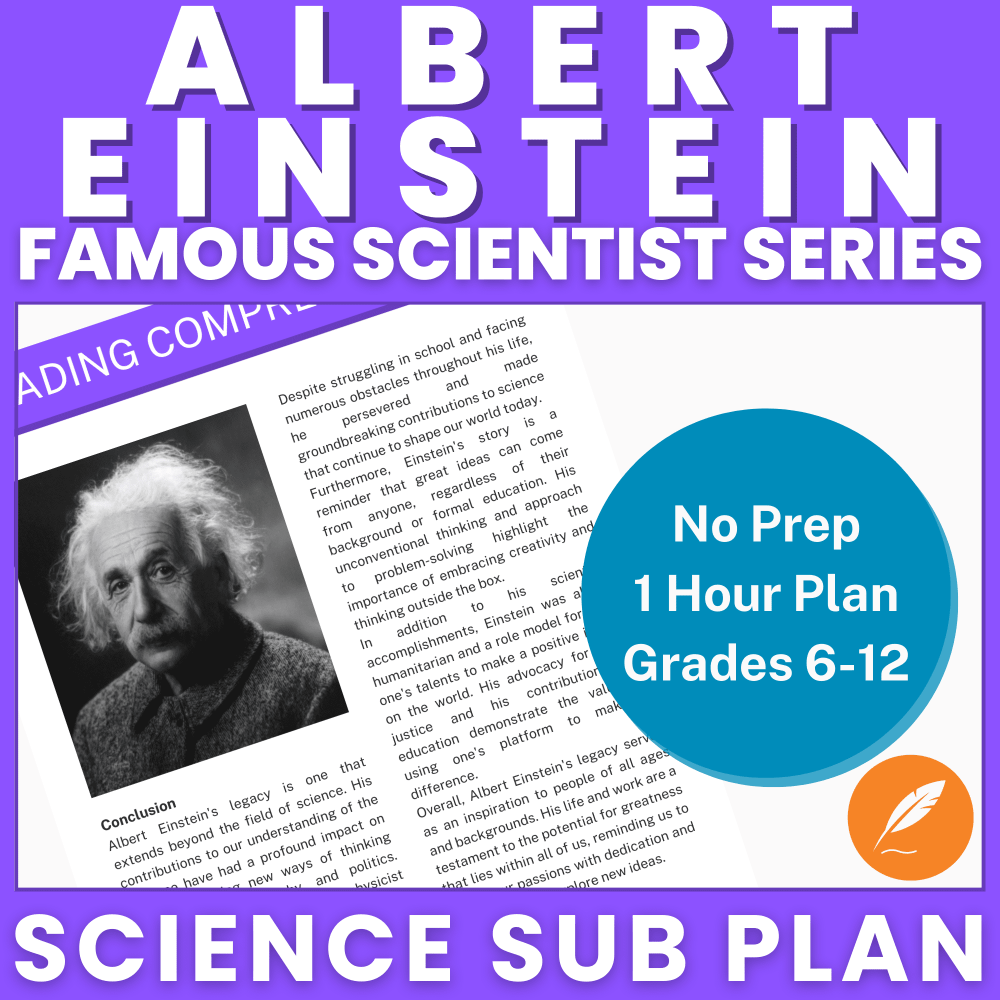
Check out our Albert Einstein lesson plan on TPT - complete with Reading Comprehension, a WebQuest, Case Studies and Debate Topics!
What Did Albert Einstein Actually Figure Out?
So, what exactly did Albert Einstein do that makes him such a massive deal? You don't need to be a physicist to explain the heart of his ideas to your students. His most famous work is the Theory of Relativity. Now, that sounds complicated, but the core concept is actually quite beautiful and simple. Before Albert Einstein, people—even scientists—thought that time and space were like a fixed, giant box that everything happened inside of. Everyone thought that if you and I looked at a clock, we'd both agree on the time, always.
But Albert Einstein said, "Nope, not quite!" He argued that time and space aren't separate things; they are woven together into something he called spacetime. And here's the kicker: how you experience time and space depends on how fast you are moving. He realised that the speed of light is the absolute speed limit of the universe—nothing can go faster than light. And because the speed of light must be the same for everyone, no matter how fast they are moving, something else has to change: time!
The Simple Truth About Time and Motion
This is where the idea of time standing still comes from. Albert Einstein showed that as you move faster, time actually slows down for you compared to someone who is standing still. Imagine you have two identical twin astronauts. One stays on Earth, and one flies very, very fast out into space and comes back. When the travelling twin returns, they would be slightly younger than the twin who stayed on Earth! It’s wild, right? It means that time isn’t an absolute clock ticking away the same for everyone; it’s relative to your motion. You’ve just got to love how Albert Einstein thought outside the box!
You might be thinking, "Well, I don't see time slowing down when I drive my car." And that’s a fair point! You don’t notice it because the speeds you experience every day are tiny compared to the speed of light. The effect is only noticeable at extremely high speeds. But trust me, this small tweak in understanding makes a huge difference to how engineers and scientists plan things like satellite communications. Your GPS in your car works because engineers use Albert Einstein’s equations to correct for the fact that the satellites are moving so quickly above the Earth that their clocks run a tiny bit slower than ours!
Question for the Class: If you could travel in a spaceship so fast that time slowed down for you, would you use it to travel to the future, or would you stay on Earth?
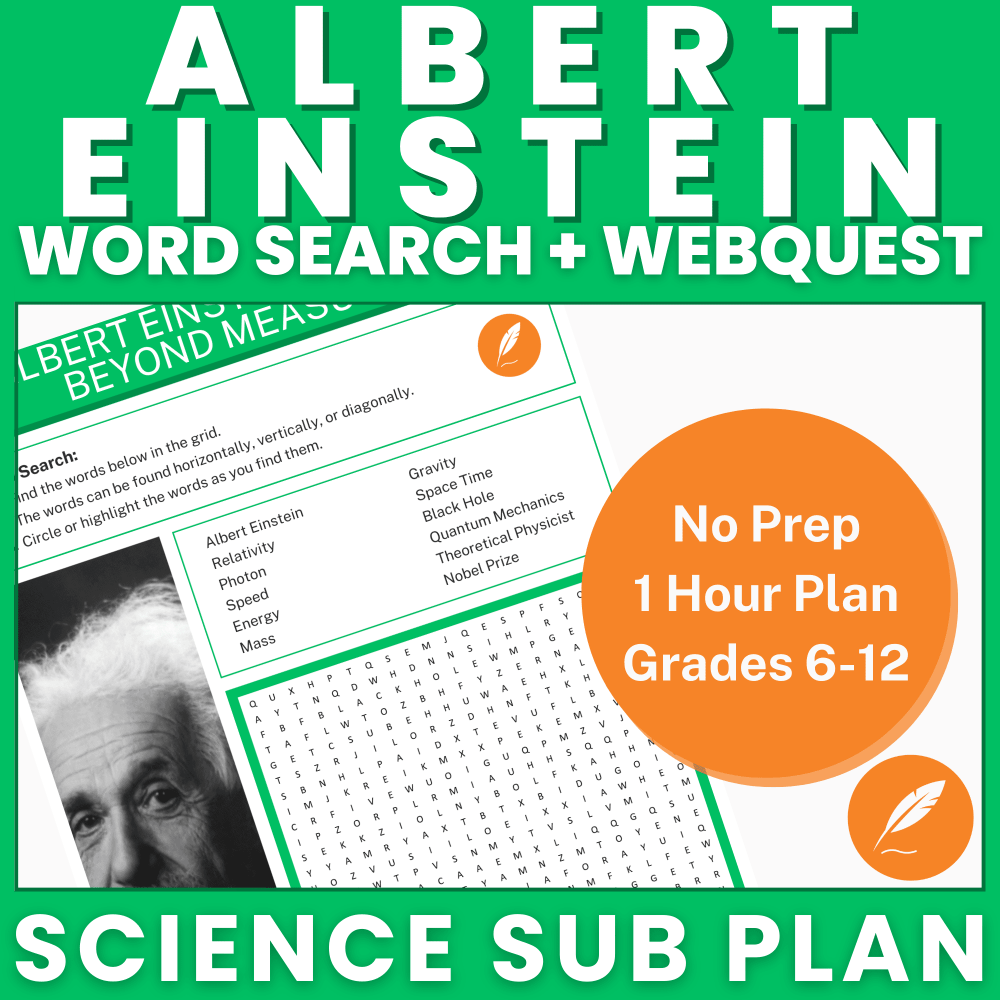
Check out our Albert Einstein Word Search on TPT - complete with a WebQuest and Discussion Questions - perfect Bell Ringer tasks!
The Famous Equation: E=mc2
Even if your students have never heard of relativity, they’ve almost certainly seen the most famous equation in the world: E=mc2. It’s everywhere, isn’t it? This brilliant, tiny equation is another amazing idea from Albert Einstein, and it completely changed our understanding of matter and energy. It's actually a key part of his Theory of Relativity, but you can talk about it separately, too.
What does it actually mean? Well, simply put, it means that energy (E) and mass (m) are really the same thing, just in different forms. The c2 part is the square of the speed of light (a huge number), and it acts like a conversion rate. It shows that even a tiny amount of mass contains a colossal amount of energy. Think of it like this: matter is frozen, concentrated energy. And when you "unfreeze" it, you get an enormous amount of power. It's truly a concept that blows your socks off!
Why E=mc2 is a Big Deal
Before Albert Einstein came along, people thought energy and mass were two separate things. You could have one or the other, but they didn't mix. His equation proved they could be changed back and forth. You won’t have to worry about complicated maths with your primary-aged students; the concept itself is enough to spark amazement. You can tell them that this simple equation explains how the sun makes heat and light—it’s constantly converting tiny amounts of its mass into huge amounts of energy. The sun isn't "burning" like a fire; it’s literally turning matter into light!
This simple piece of scientific insight from Albert Einstein helped lay the groundwork for understanding nuclear power and nuclear weapons, which shows how one theoretical idea can have such an enormous impact on the real world. It reminds you that pure thought can lead to the most practical and powerful changes in society. He didn’t invent these things, of course; he just provided the deep understanding of physics that made them possible. That’s the power of asking the right questions!
Question for the Class: If you could invent a machine that uses E=mc2 to do something helpful for the world, what would that invention be?
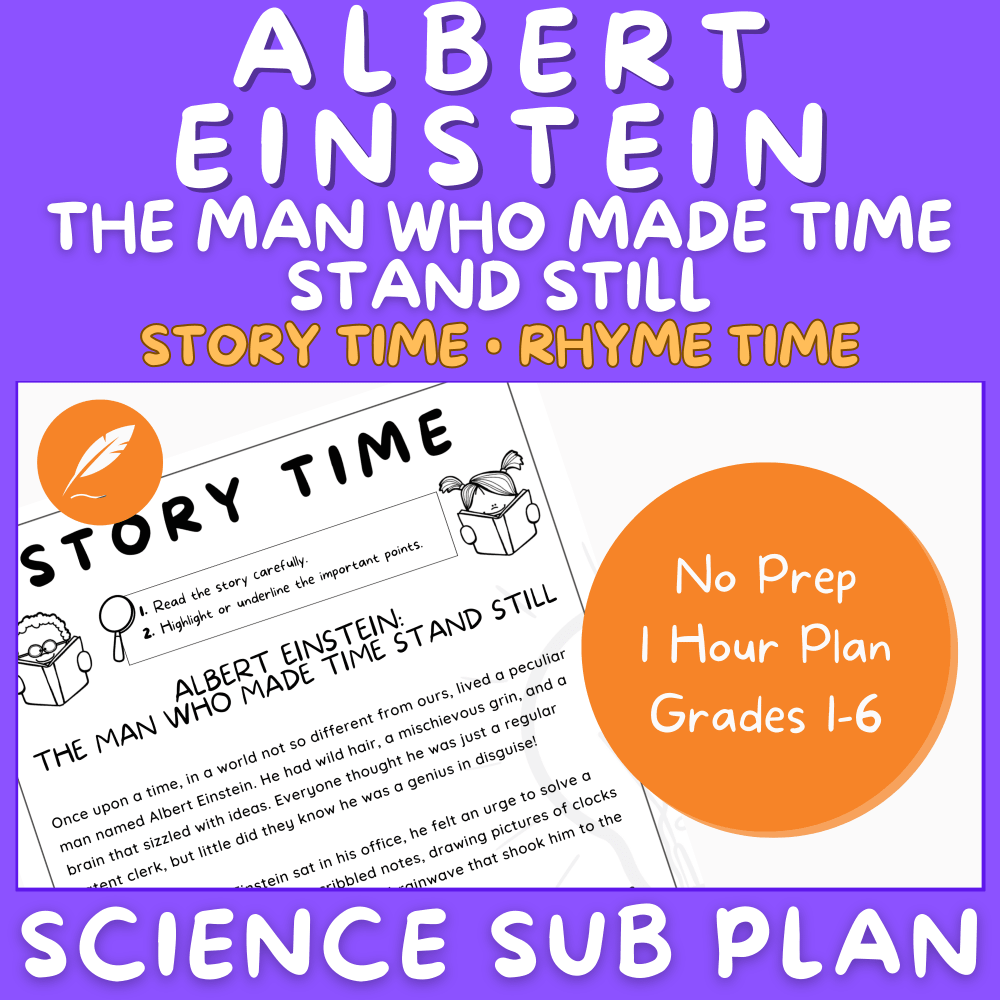
FREE Primary Lesson Plan
Enjoy this FREE lesson plan all about Albert Einstein, his work and legacy — perfect for your young Science Ninjas.
The download includes Story Time, Rhyme Time, and simple activities that help children explore Einstein’s curious mind in a fun, friendly way.
Ideal for quick cover or an easy classroom treat, this cheerful lesson is ready to use and instantly engaging. Just click, download, and enjoy!
Albert Einstein: Thinking Beyond the Textbook
Albert Einstein had a wonderfully rebellious streak. He wasn’t content to simply accept what was already known. He often said, "Imagination is more important than knowledge." And you can see that sentiment shine through in all his work. He didn't come up with his great ideas by doing endless experiments in a lab. In fact, many of his biggest breakthroughs came from what he called "thought experiments," or Gedankenexperimente in German.
What is a thought experiment? It’s basically just imagining a scenario in your head and following the logic to its natural conclusion. For example, he used to imagine himself chasing a beam of light. What would happen? If he went at the speed of light, would the beam of light stop moving from his perspective? He reasoned that if it did, it would violate another law of physics, which led him to his conclusions about relativity. It's a fantastic example of using creativity and logic to solve problems, which aligns perfectly with the critical thinking skills you want to foster in your students.
From relativity to quantum mechanics, Albert Einstein changed the world of science. Explore his incredible contributions to modern physics! #AlbertEinstein #CosmicGenius #Physics @inspirationalscienceforsubs
What Can You Learn From Albert Einstein’s Methods?
The best thing about thought experiments is that anyone can do them! You don’t need expensive equipment; you just need your mind. It’s a great way to show students that science isn't all white coats and microscopes; sometimes, it’s just lying on the grass and staring at the clouds while you imagine big ideas. Albert Einstein proved that thinking differently is the real key to innovation. He wasn’t afraid to look silly or challenge the status quo. He didn't just accept the facts presented in his science textbooks; he questioned the very foundation of those facts.
This is why his story is so important for your classroom. It encourages pupils to be sceptical (in a good way!) and to trust their own intuition and curiosity. Albert Einstein’s life is a perfect example of someone who never stopped exploring. He kept asking questions right up until the end, proving that learning is a limitless learning journey. He showed that every single person can change the world just by having a big idea and the persistence to follow it through.
Question for the Class: If you could travel to the edge of the universe, what is the first thing you would look for or try to see?
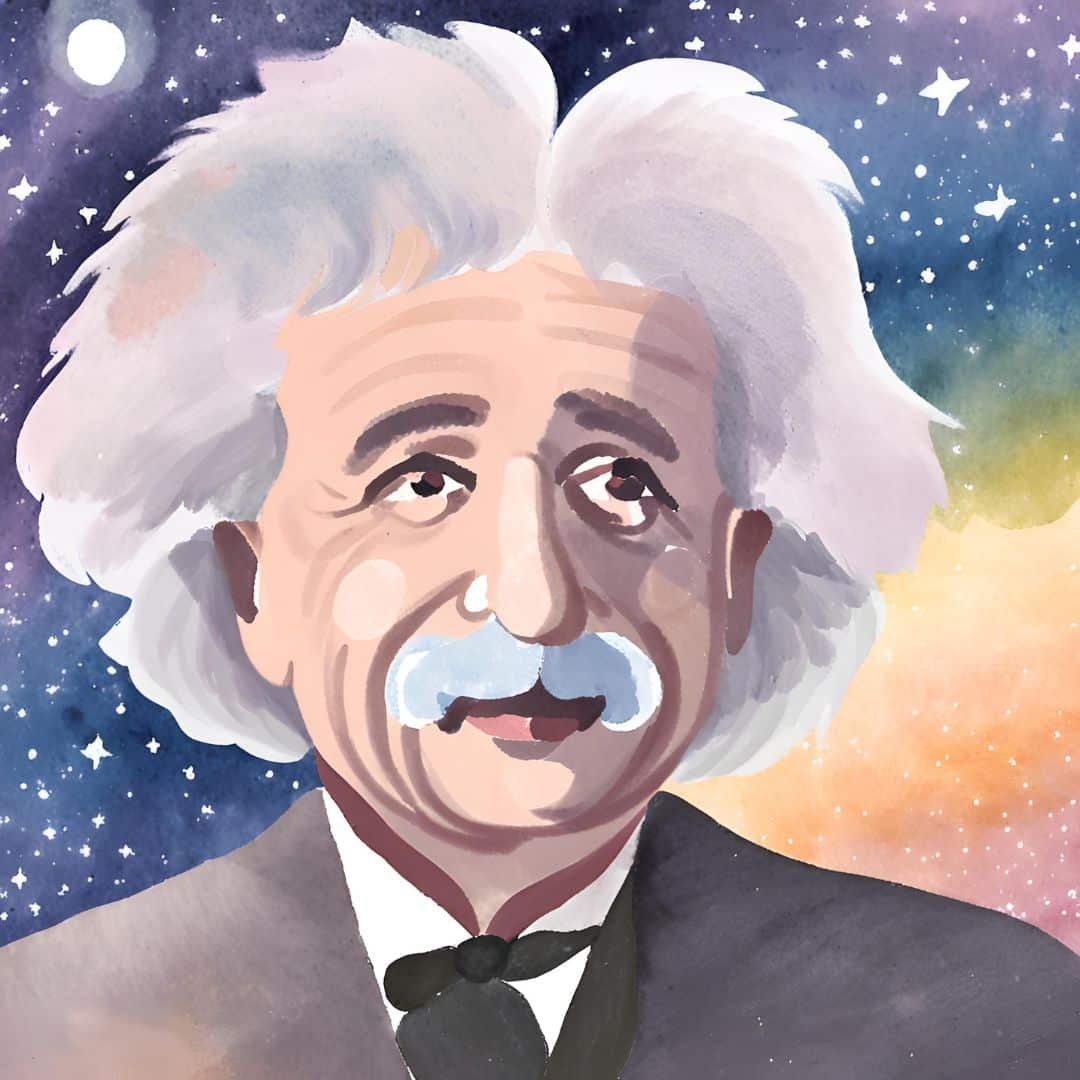
Inspire Your Students with Albert Einstein
Hopefully, these simple facts and stories about the legendary Albert Einstein will give you loads of great content to use in your classroom, whether you're teaching US Grades 1-6 or beyond. His quirky personality, his struggles in school, and his unbelievably powerful mind make him incredibly relatable and inspiring. You don’t have to worry about teaching E=mc2 to six-year-olds; you just need to show them the amazing power of curiosity.
Remember, you're not just teaching science; you're sparking creativity and igniting a love of learning that can last a lifetime. Albert Einstein’s life offers brilliant lessons in perseverance and the simple but profound joy of exploration. You’ll find that using these engaging stories helps students connect abstract concepts to a real, slightly messy, and very human person. That’s what going beyond the textbook, beyond limits is all about. You’ll be helping them develop critical thinking skills simply by telling them a good story.
Albert Einstein was more than a scientist; he was a philosophical thinker who taught us that the world is much weirder and more wonderful than we initially thought. And that’s a lesson worth sharing!
Enjoyed the article?
Summary: Lessons from the Most Famous Scientist
What an amazing man! From a quiet child who struggled in school to the mind that proved time itself isn't a constant, the story of Albert Einstein is truly one for the ages. It’s a powerful reminder to all your students that being different, asking strange questions, and pursuing your own quiet interests can lead to world-changing breakthroughs. His life is a testament to the idea that genuine innovation doesn’t require perfection or immediate success, but a deep, driving curiosity about the way things work.
You’ve now got a whole host of simple, compelling facts you can use to inspire your students. Use the story of his thought experiments to encourage them to explore problem-solving creatively. Use the story of the compass to show them that a small spark of interest can lead to a great career in science. You’ve seen how Albert Einstein’s ideas, from his work on how time slows down to the meaning of E=mc2, can be simplified and shared to encourage exploration and critical thinking. It really is the perfect learning journey to share.
What fascinating fact about Albert Einstein do you think your students will find the most amazing, and how are you planning to incorporate his story into your next lesson? Do let us know in the comments below!