

Right then, let’s talk about Charles Darwin. You’ve taught about the Galápagos finches, the voyage of the HMS Beagle, and, of course, natural selection. It’s foundational science, isn’t it? But, honestly, how often do your students’ eyes glaze over when you get to the bit about barnacles or earthworms? Yep, thought so.
The truth is, Charles Darwin was a fascinating chap with a life full of odd quirks and brilliant ideas that stretch far beyond the Origin of Species. You’re trying to spark that genuine curiosity, that love of learning in your students, and sometimes, the best way to do that is to put the textbook down for a second and share the juicy, human-side of the scientific giants. You won’t have to waste time re-explaining the same thing next year if you can hook them now with something genuinely memorable. You're going to get some brilliant Charles Darwin facts that are perfect for US high school students (Grades 6-12), offering that "beyond the textbook" material to inspire their critical thinking and problem-solving. This isn't just history; it’s a masterclass in scientific exploration. So, let’s dive into some lesser-known tales of Charles Darwin that are bound to keep your class wide awake!
More...
The Great Experimenter: Charles Darwin’s Odd Obsessions
You likely know Charles Darwin as a keen observer of nature, right? But did you know he was also a prolific (and sometimes slightly bizarre) home experimenter? He wasn’t just collecting specimens on the Beagle; once he settled down in his country house, Down House, he turned his garden, and even his drawing-room, into a personal, hands-on laboratory. He was constantly tinkering, poking, and prodding, determined to get a deeper understanding of natural selection in action, or just to satisfy a burning curiosity.
One of his most enduring and least glamorous passions was for earthworms. I know, I know—not exactly a blockbuster topic! But Charles Darwin spent decades observing how they aerated the soil, literally watching them drag leaves into their burrows. He even conducted an experiment where he played the piano near them to see if they reacted to the sound waves (they didn’t, it turns out). He published a whole book, The Formation of Vegetable Mould Through the Action of Worms, which sold far better than Origin of Species initially did! It’s a brilliant example of how even the smallest creature can reveal huge truths about how the planet works. Trust me, this small tweak in focus—from big ideas to tiny, persistent creatures—makes a big difference to engagement.
Check out our Charles Darwin lesson plan on TPT - complete with Reading Comprehension, a WebQuest, Case Studies and Debate Topics!
He Ate Them, Too: Darwin the Gastronome
But it gets weirder! Before he got seriously ill, young Charles Darwin was something of a foodie, but with an extremely experimental palate. At Cambridge University, he was part of a group called the Glutton Club, whose sole mission was to eat "strange and curious animals." They chowed down on hawks and owls, although they apparently gave up when they tried to eat a brown owl, which was described as "indescribably tough."
Later, on the Beagle, his culinary exploration continued. He ate everything from armadillos to rheas (ostrich-like birds), and he sent back detailed notes about the taste of various animals. Imagine the look on your students’ faces when you tell them that a core figure in science was willing to literally taste-test his way around the world! It shows a commitment to sensory and scientific understanding that’s quite remarkable. It’s definitely a Charles Darwin fact that sticks!
Discussion Question for the Class: If you had to eat an entirely new, safe-but-unfamiliar animal from the Amazon rainforest to better understand its biology, would you do it? Why or why not?
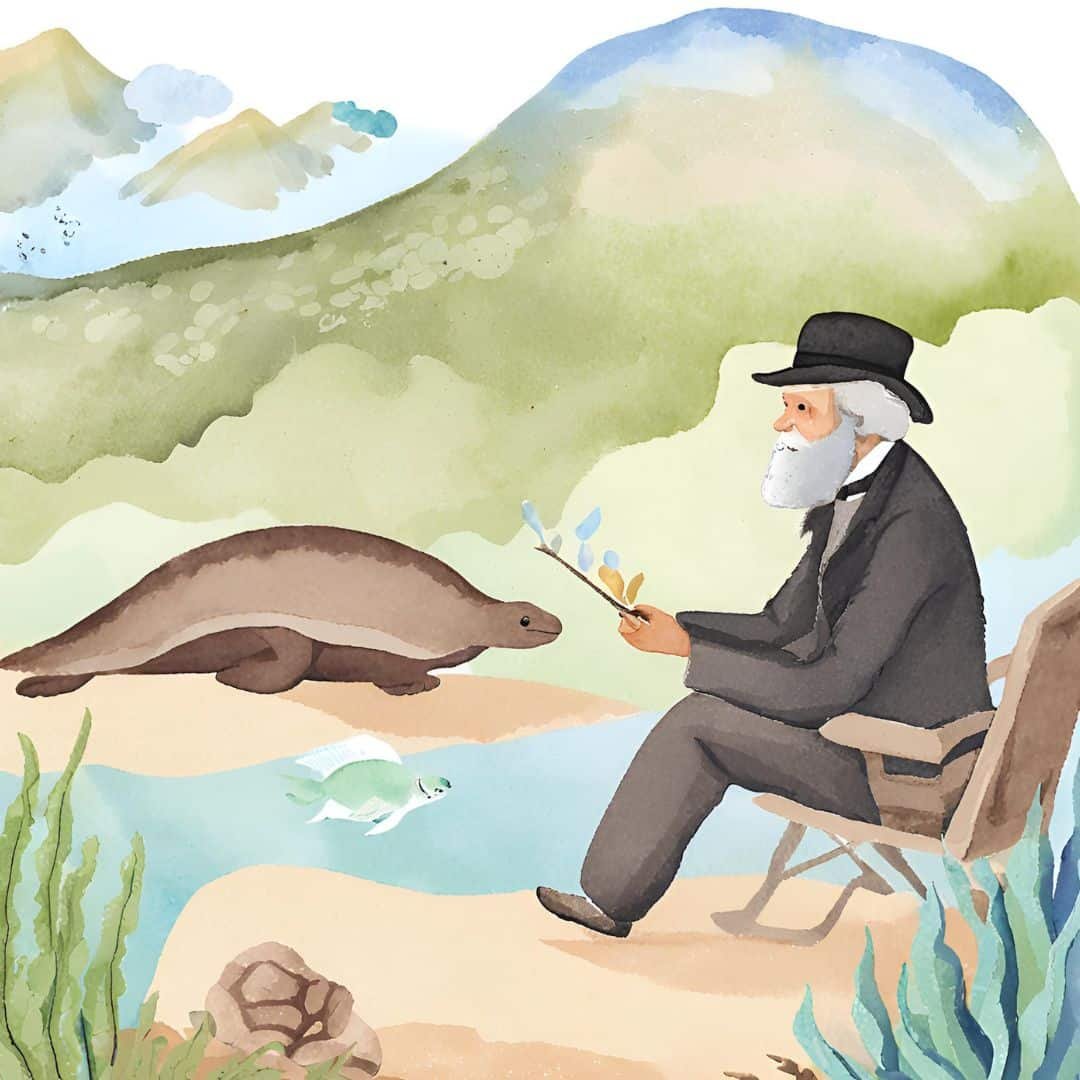
The Real Story of the Beagle Voyage: Charles Darwin’s Sea Sickness Struggle
When you talk about the five-year voyage on the HMS Beagle, you probably focus on the places they went and the specimens Charles Darwin collected. That’s the important stuff for understanding natural selection, of course. But you might miss the truly human side of the exploration: Charles Darwin was horribly, chronically seasick for the entire trip. Seriously, five years of debilitating nausea! Can you imagine?
It wasn’t just a little queasiness; it was so severe that it nearly caused him to quit at the start. Captain Robert FitzRoy was a difficult and volatile character, and the ship was tiny and cramped for a scientific expedition. The conditions were awful. Yet, Charles Darwin persisted. Why? Because the work was everything to him. He spent as much time as possible off the ship, either studying the geology on shore or sketching, collecting, and writing his observations. This resilience is a powerful lesson in dedication. It speaks volumes about his character and his immense drive for scientific exploration—he was literally sick for years but never gave up on his purpose.
Check out our Charles Darwin Word Search on TPT - complete with a WebQuest and Discussion Questions - perfect Bell Ringer tasks!
The Myth: How He Didn't Discover Natural Selection
Another myth you can easily squash for your students concerns when he actually formulated his theory. Often, the narrative implies that Charles Darwin stepped off the Beagle and immediately wrote Origin of Species. Not so! While the Galápagos Islands were undoubtedly a crucial part of his observations, particularly regarding the different beaks of the finches—a key piece of evidence for natural selection—the true conceptual breakthrough happened after he returned to England.
He spent years meticulously organising his specimens and reading widely. The 'Aha!' moment, the key to unlocking his theory, actually came after reading Thomas Malthus's Essay on the Principle of Population in 1838. Malthus argued that human populations will always grow faster than their food supply, leading to a struggle for existence. Charles Darwin simply took that idea of competition and applied it to the whole of nature. He realised that in this 'struggle,' the individuals with slightly advantageous traits would be more likely to survive and reproduce. That’s the simple genius of natural selection!
Discussion Question for the Class: If Charles Darwin had been able to text or email FitzRoy and his family every day, do you think he would have stayed on the Beagle, or would the constant communication have made his terrible seasickness and isolation feel worse?
Check out our Primary School Charles Darwin lesson plan on TPT - complete with Story Time, Rhyme Time, True/False Factoids, Difficult Words Explained and a Coloring In Activity!
The Waiting Game: Why Charles Darwin Delayed Publication
This is a Charles Darwin fact that really speaks to the scientific process and the pressure of revolutionary ideas. Charles Darwin had a fully formed, comprehensive outline of his theory of natural selection by about 1844, yet On the Origin of Species wasn't published until 1859. That’s a 15-year delay! Why? Well, there are a few compelling reasons you can share with your students to spark a conversation about scientific integrity and personal conviction.
Firstly, Charles Darwin was a meticulous scientist who knew the immense weight of his claim. He wasn't just throwing out an idea; he was proposing a mechanism for the creation of all life on Earth that excluded a divine creator. He felt an obligation to have every single piece of evidence utterly iron-clad. He spent years documenting the variations in pigeon breeding, for example, just to establish the principle of artificial selection before moving to the natural kind. This patient, methodical approach is a powerful lesson in rigorous critical thinking.
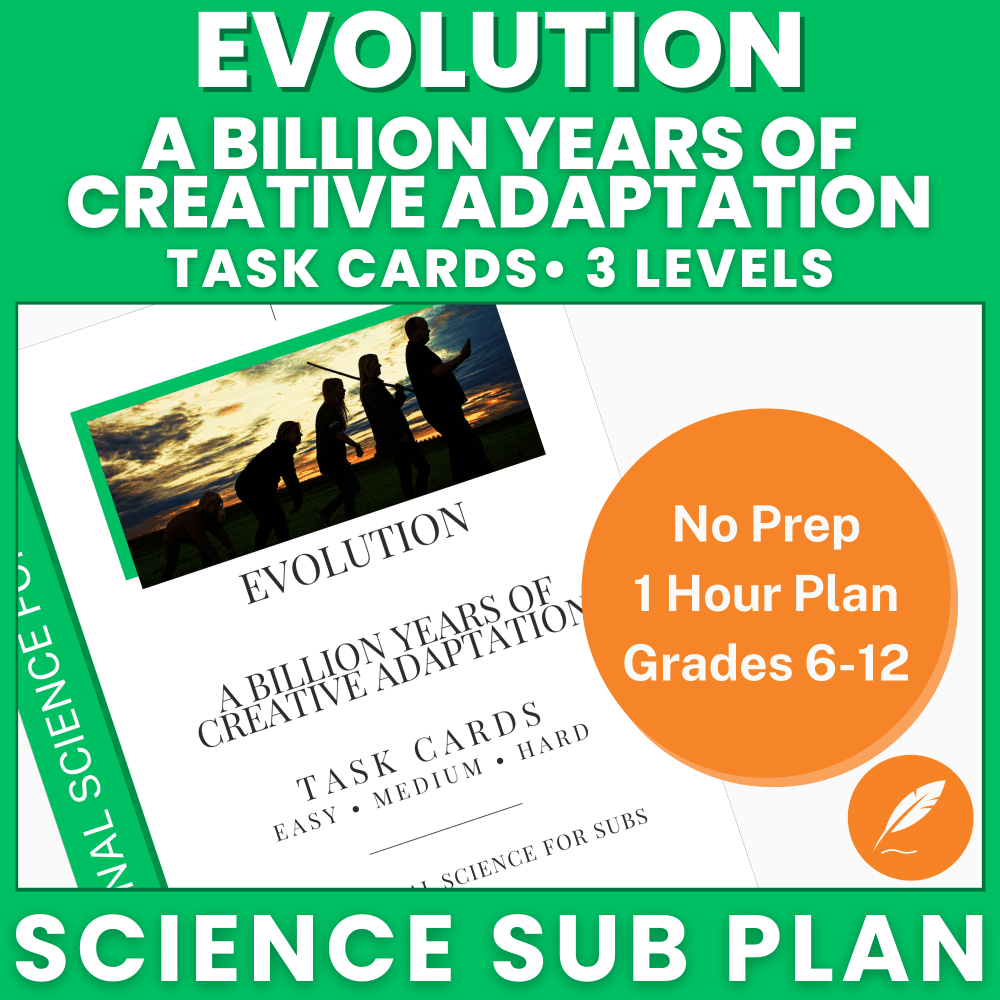
Check out our Evolution Task Cards on TPT - complete with 3 difficulty levels; Easy, Medium, Hard. Perfect to keep ALL your students engaged, regardless of their abilities!
The Catalyst: Alfred Russel Wallace and Shared Scientific Discovery
The second, and perhaps more dramatic reason, is Alfred Russel Wallace. Wallace was a younger, working-class naturalist doing his own extensive exploration in the Malay Archipelago (Southeast Asia). In 1858, while recovering from a fever, Wallace had his own flash of insight—the very same mechanism of natural selection that Charles Darwin had been keeping under wraps for years!
Wallace sent his paper describing the theory to Charles Darwin, who was utterly floored. He felt compelled to publish immediately, but not out of a desire to steal credit. Instead, Darwin's friends—geologist Charles Lyell and botanist Joseph Hooker—arranged for a joint presentation of both Darwin’s and Wallace’s work to the Linnean Society of London. This remarkable episode shows how two minds, working independently on different continents, reached the same conclusion through careful scientific exploration and problem-solving. It’s a wonderful example of collaborative, ethical science, even under pressure.
Discussion Question for the Class: If you had discovered a major, paradigm-shifting scientific theory, would you wait 15 years to publish it to ensure it was perfect, or would you announce it immediately? What are the pros and cons of each choice?
A Family Man's Private Pain: Darwin's Personal Life
Beyond the barnacles and the Beagle, Charles Darwin was, at his core, a devoted husband and father. His wife, Emma Wedgwood, was a fascinating, intelligent woman who was also deeply religious. This created an incredibly difficult personal tension, especially as Darwin’s ideas about natural selection began to solidify and contradict the literal reading of the Bible. They had ten children together, and the family life at Down House was warm, stable, and surprisingly normal—full of games and domestic experiments.
His personal life is key to understanding natural selection not because it influenced the science, but because of how the science influenced him. The greatest tragedy of his life was the death of his beloved daughter, Annie, at the age of ten. She died after a long illness, and her death shattered Charles Darwin’s remaining religious faith. He was already leaning towards agnosticism, but Annie’s suffering and death convinced him that the idea of a benevolent, interventionist God was simply incompatible with the brutal realities of the world he was studying. His personal pain is a raw, relatable element that shows the human cost of his monumental exploration.
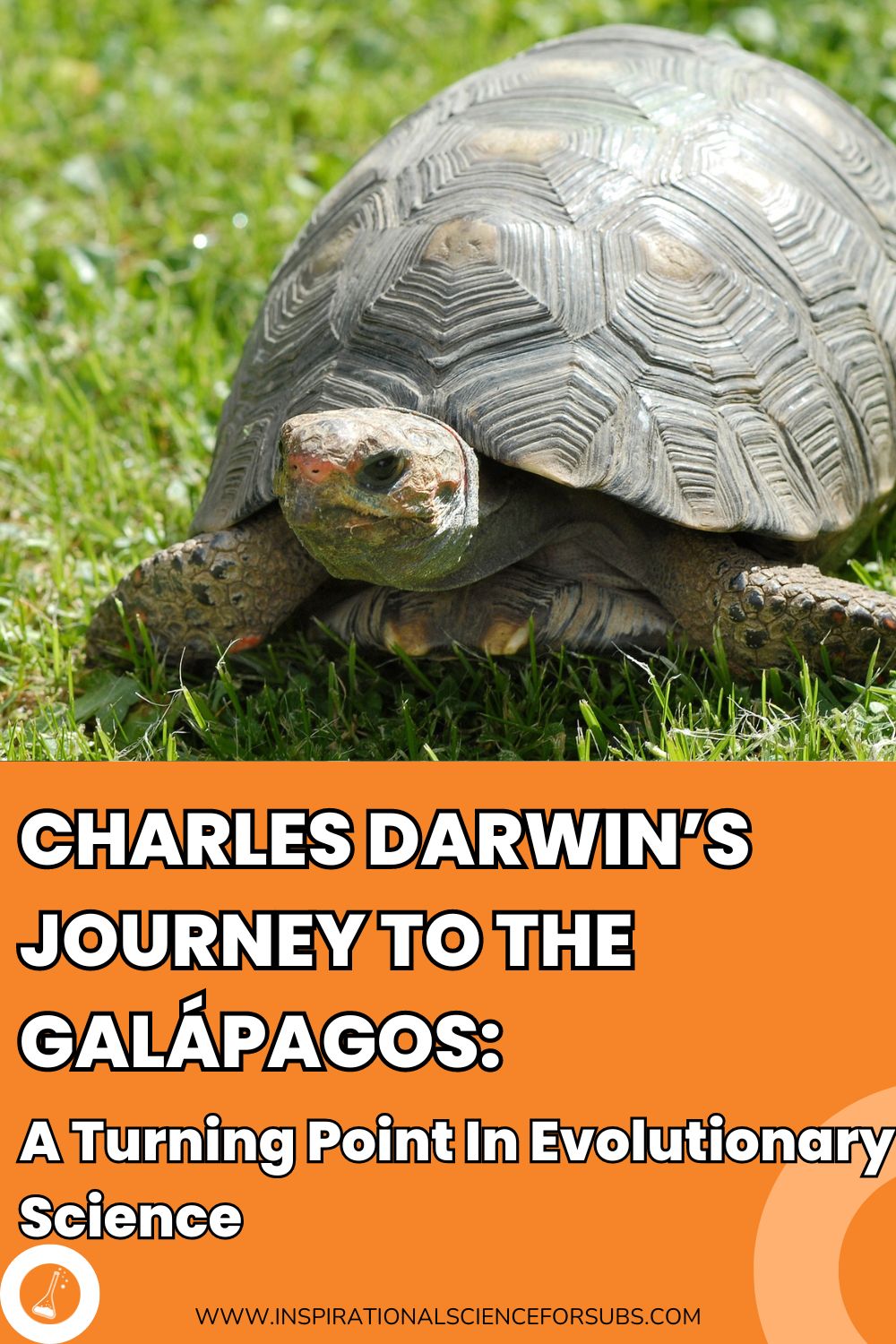
Charles Darwin’s Galápagos expedition was a breakthrough in evolutionary science. Learn about the journey that changed everything. #Evolution #Darwin #Galápagos @inspirationalscienceforsubs
Darwin and the Power of Observation
Even his family became material for his scientific work, though in a much more loving way than his consumption of rare animals! One of his later, lesser-known books, The Expression of the Emotions in Man and Animals, is a fascinating piece of behavioural science. In it, Charles Darwin used his own children, particularly his sons, as subjects, closely observing their facial expressions and responses to different stimuli.
He was meticulously charting how emotions like joy, sadness, and surprise are expressed not just across different human cultures, but also how they compare to the expressions of various animals. This work established a fundamental principle: emotional expressions are universal and have evolutionary roots—they are inherited traits, just like beak shape. This relentless, almost obsessive need for exploration and data collection is a brilliant example of how science isn't just done in a lab, but in observing the world around you, even your own family. It’s an easy Charles Darwin fact to bring up in class.
Discussion Question for the Class: If you could only keep one trait that you inherited from your family—it could be a physical feature, a personality trait, or an emotional response—what would you choose, and why do you think it helps you succeed in life?
Enjoyed the article?
Summary: A Legacy Beyond the Books
Hopefully, these little-known Charles Darwin facts have given you a fresh perspective—and a load of new material—to make your science lessons buzz a bit more. He wasn't just a distant, bearded figure; he was a sea-sick, worm-obsessed, pigeon-fancying father who struggled with his health and his faith, all while meticulously building one of the most powerful and important ideas in human history: natural selection. His life is a brilliant case study in perseverance, rigorous problem-solving, and the relentless pursuit of knowledge through careful exploration.
Remember, your goal is to go beyond the textbook and ignite that love of learning in your students. By showing them the human side of the scientist, you can inspire them to look at the world with the same spirit of curiosity and critical thinking that Charles Darwin possessed. We truly hope this content helps you save time and gives you innovative ways to inspire your students. You’ll find that using these stories and little personal details is a great way to make a Charles Darwin lesson stick in their minds. What's the one thing about Charles Darwin you’ve learned today that you’re most excited to share with your class? Drop a comment below!