

You know that moment when a student's eyes light up because they've finally grasped how something works? That’s what you live for! And honestly, what’s more fascinating, more relatable, and just plain cool than the human body? It's the ultimate machine, running all the time, right there inside us.
You might feel like you’ve covered the basics of the human body systems countless times, but there are always fresh, innovative angles to keep things exciting, whether you’re teaching primary pupils or older secondary students. Here at Inspirational Science For Subs, you understand you’re going beyond the textbook, looking for things that spark creativity and ignite a real love of learning. That's why you're here! This post is packed with practical lesson ideas that will help you save time and, more importantly, inspire your students to explore biology, critical thinking, and problem-solving through the amazing systems of the human body. You’ll see that small tweaks to your existing material can make a massive difference in classroom engagement. Let’s jump right in!
More...
Creative Ways to Explain Digestion in the Human Body
Digestion often feels like a dry topic: mouth, oesophagus, stomach, intestines. Yawn! But you can make the whole process much more dynamic and frankly, a bit messy—which kids absolutely love. Think of the digestive system not as a series of static organs, but as a food-processing factory with a serious quality control department. You can take something abstract like chemical breakdown and make it wonderfully concrete.
Building a Model Digestive System
Forget flat diagrams for a minute. You can physically demonstrate the journey of food through the human body using simple household items. This works brilliantly for younger students (US 1-6) but even older students appreciate the visual aid. Think of a plastic zip-top bag as the stomach (stomach acid is represented by a small amount of water and vinegar), and a nylon stocking or long tube as the intestines. Students can add crackers (the food) to the 'stomach' bag and mash it up to simulate mechanical digestion. Then, squeezing the mixture through the stocking demonstrates absorption and peristalsis. It's highly visual, a little gooey, and makes the function of each organ instantly clear. You’ll find you won't have to waste time re-explaining the concepts of chemical versus physical change; they'll literally see it happen. Another fun way to look at the human body is to focus on the amazing surface area in the small intestine; you could even have students try to calculate it! That’s an easy way to link science and maths.
Exploring the Role of Enzymes
For your secondary students (US 6-12), you can elevate the topic of digestion by diving into the specific role of enzymes. Instead of just stating what amylase does, let them test it. A simple experiment using iodine to test for the presence of starch and saliva mixed with a cracker will show the action of amylase right before their eyes. The cracker that’s been chewed (with saliva) will show less starch than one that hasn't, illustrating why chewing is so important to the initial stages of digestion in the human body. It turns passive listening into active observation and problem-solving. This isn't just about learning names; it’s about understanding biological catalysis.
Question for the class: If you could design a new super-powered enzyme that instantly broke down all unwanted toxins in your food, where in the human body would you place it for maximum effectiveness and why?
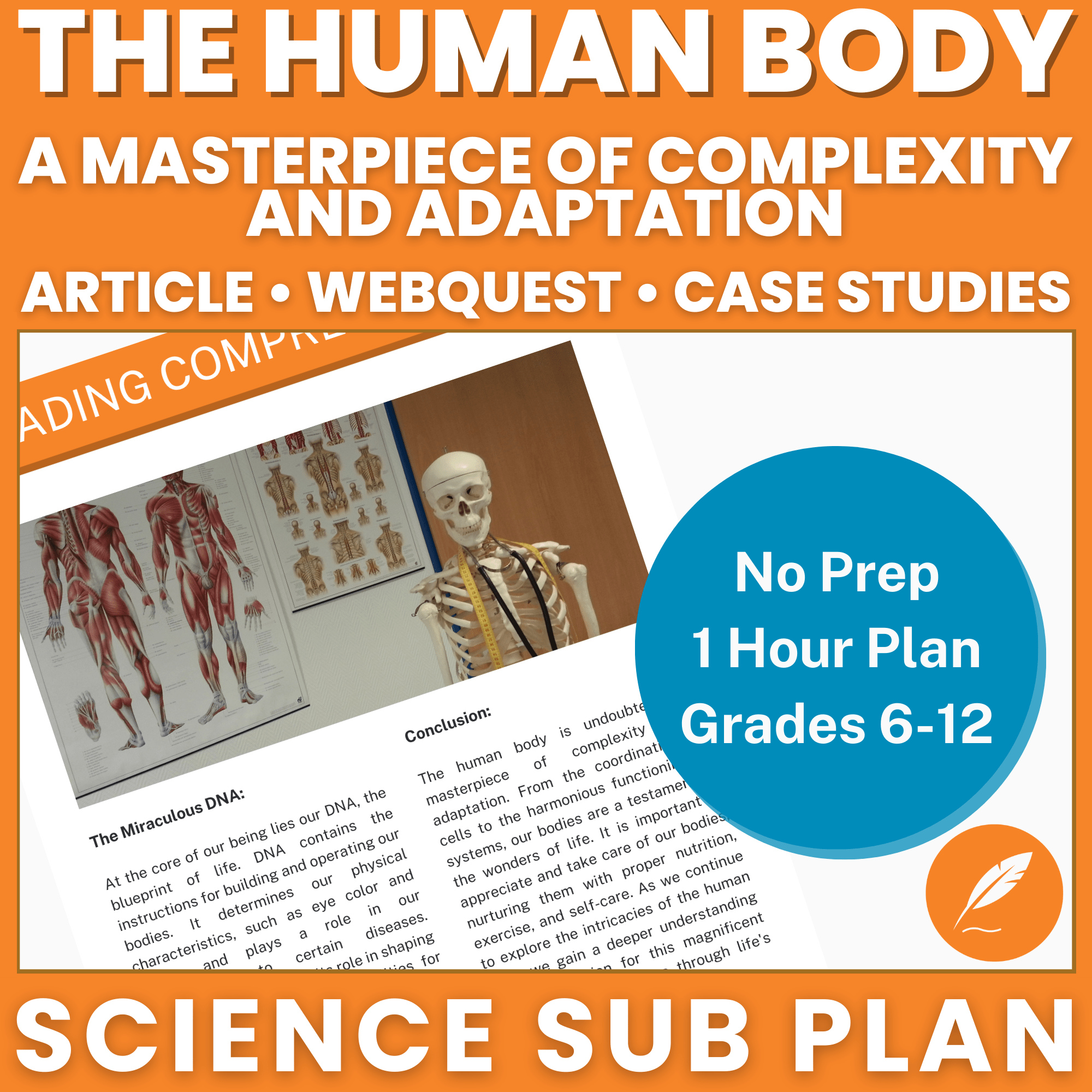
FREE Lesson Plan
Grab your FREE Human Body lesson ideas plan covering digestion, central nerves, and anatomy for secondary grades! You'll get engaging activities, practical tips, and resources designed to spark critical thinking and solve classroom planning challenges. These creative lesson ideas help you easily integrate hands-on science and health education.
Stop scrolling, start teaching!
Integrating Art and Anatomy Lessons
Getting artistic with anatomy is a fantastic way to engage students who might switch off during traditional lectures. The human body is a structural masterpiece, and studying it through colour, texture, and creativity boosts memory and spatial reasoning. You don't need to be an art teacher to bring this to life.
‘Body Mapping’ for Primary Grades
For younger learners, body mapping is a low-tech, high-impact lesson idea. Roll out large sheets of butcher paper and have students trace the outline of a classmate (with permission and supervision, naturally!). Once the outline is complete, they become cartographers of the human body. Students can draw the major organs they know—the heart, the lungs, the stomach—and colour them accurately. You can even use different coloured yarns to represent the circulatory or nervous system pathways running across the ‘body’ map. This is a wonderfully kinetic activity that gives them a tangible, life-size reference for where things actually sit inside the human body, rather than just seeing small textbook diagrams. Trust me, this small tweak makes a big difference to their retention.
Sculpting Systems for Secondary Students
You can challenge your older students to sculpt a specific organ or system. Clay, dough, or even recycled materials can be used. Instead of merely labelling a diagram of the heart, they have to build it, ensuring the correct chambers, valves, and vessels are included. This elevates the exercise from memorisation to structural understanding. You might assign different groups to create models of the respiratory, skeletal, or nervous system of the human body. They'll need to research the 3D structure and spatial relationship of the components, which is a huge critical thinking exercise. The resulting models can then be used by the class for presentation and peer-teaching, making the student the expert. This is a proven lesson idea for developing deeper comprehension. You’ll be surprised at the level of detail they achieve when their creative license is fully engaged.
Question for the class: If you were an artist commissioned to paint the flow of blood through the four chambers of the heart, what four colours would you choose to represent oxygenated versus deoxygenated blood, and why did you make that artistic choice?
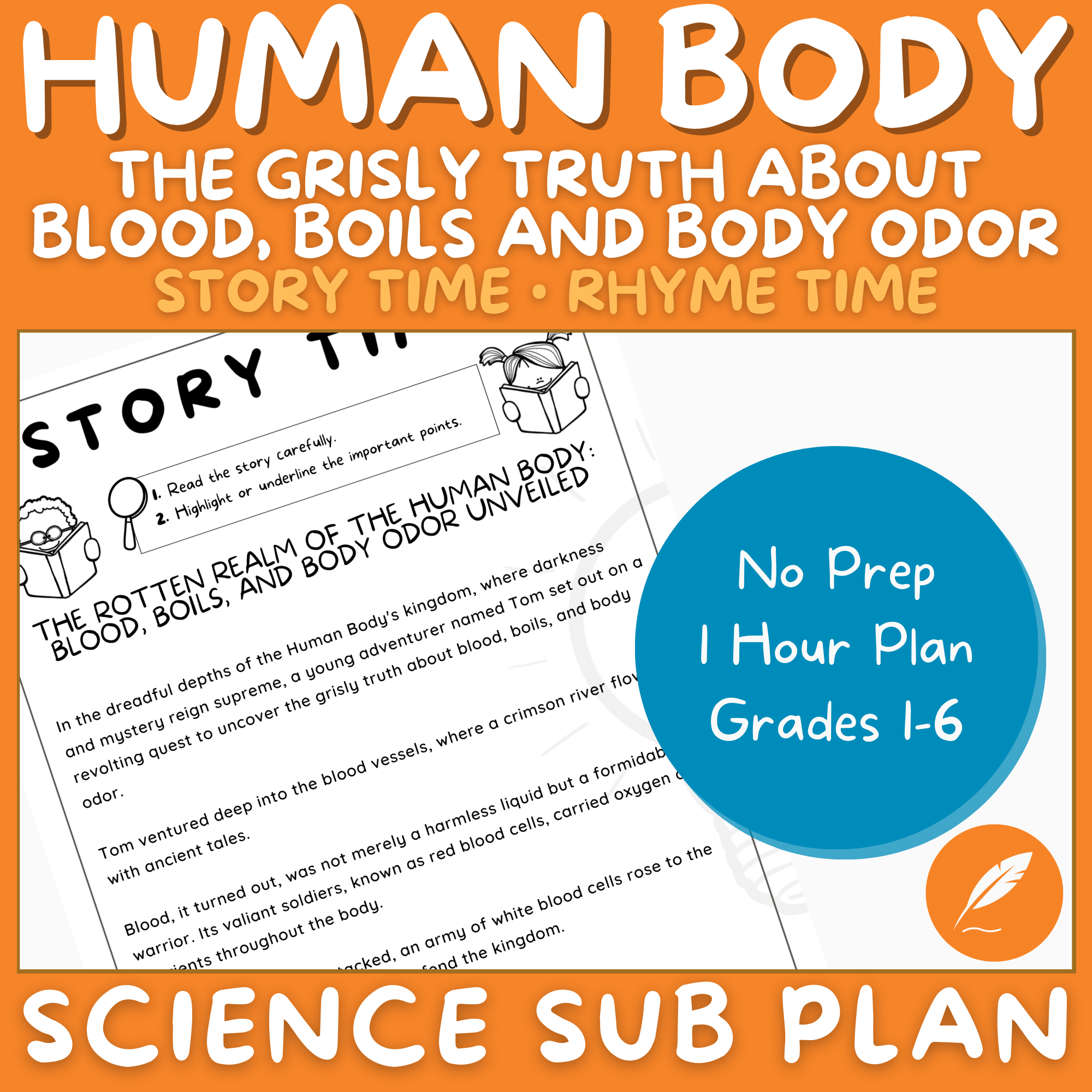
FREE Lesson Plan
Ready to tackle the human body's most intriguing (and sometimes 'gross') realities in your classroom?
Discover how to make blood, boils, and body odor genuinely fascinating for students while simplifying your lesson planning with engaging, accurate information.
Get your FREE lesson plan now and inspire your students today!
Why Sleep Is So Key for Learning and the Human Body
Sleep often gets overlooked in science class, yet it's absolutely vital for brain function and overall health. You can use this topic to naturally bridge biology with health and wellness, which is a crucial part of a student's education. Discussing sleep also allows you to talk about the often-forgotten endocrine system and the power of hormones.
Analysing Sleep's Impact on the Brain
For all age groups, you can start by discussing why you sleep. It’s not just to rest your legs! For older students, you can talk about the glymphatic system—a waste-clearing system in the brain that is most active during sleep. You can compare it to a clean-up crew arriving to tidy up the messy building site that is the brain after a long day of learning. This gives them a clear, relatable reason why that eight hours of sleep is so important for their memory and cognitive function. It also directly relates to their current school life and promotes healthy habits—a win-win lesson idea! Why does the human body need downtime? The science is incredibly interesting.
Linking Hormones and Growth
For your younger pupils, you can introduce the concept of 'growth hormones' and explain that these are released primarily when they’re sleeping. Telling them that getting enough rest helps them grow taller and stronger is a huge motivator! For older students, you can introduce melatonin and cortisol, the hormones that regulate the sleep-wake cycle (circadian rhythm). This is a fantastic opportunity to discuss the chemical messengers within the human body that control so many processes. They can research what happens to their concentration and mood when these hormones are out of sync due to lack of rest. It’s a very personal and persuasive way to show the power of biology.
Question for the class: Imagine you could see the levels of your sleep hormones (melatonin and cortisol) displayed above your head like a battery bar. How would knowing that information change your habits and schedule in the run-up to a big exam or a sports day?
Ready to revamp your Human Body unit? Grab five high-impact lesson ideas that foster critical thinking and problem-solving in your classroom. #ScienceLessons #TeachingTips @inspirationalscienceforsubs
Practical Tips for Health Education and the Human Body
Health education isn't just about what not to do; it’s about understanding the amazing resilience and needs of the human body. You can use practical, real-world examples to make these topics instantly relevant, particularly for your secondary students who are becoming more independent. This type of lesson idea encourages practical problem-solving.
The Science of Hand Washing
A timeless, relevant lesson idea that works for all grades is the science of hygiene. For primary students, the 'glitter bug' experiment is gold. Using glitter to simulate germs and showing how easily they spread through touch is a powerful visual demonstration. Then, demonstrate proper handwashing technique—the longer, the better—and see how much glitter remains. For older students, you can discuss the actual microbiology: the structure of a virus or bacterium and how soap disrupts the lipid bilayer of certain pathogens. Understanding how soap works makes the simple act of washing your hands a fascinating application of chemistry in the human body's defence.
Understanding Your Central Nerves
The nervous system is complex, but you can approach it through the lens of 'reaction time'—something every student enjoys measuring. Simple online reaction time tests or even the classic ruler drop test can be done in minutes. You can then use the data they collect to discuss how quickly signals travel along the central nerves and through the spinal cord and brain. Ask them to design an experiment to see if outside factors (like caffeine, distractions, or lack of sleep) affect their reaction time. This ties together the nervous system, health choices, and data analysis in a single, high-engagement lesson idea. It moves the study of the human body from simple naming of parts to practical physiological measurement.
Question for the class: If you could instantly increase the speed of nerve signals in any one part of your body by 50%, which part would you choose (e.g., your eyes, your hand, your digestive system) and what benefit would you hope to gain in your daily life?
Enjoyed the article?
Final Thoughts on Teaching the Human Body
You are doing amazing work, sparking curiosity every single day! Teaching the human body offers an unparalleled opportunity because it is the one subject every single student has in common—it's them! By using these creative lesson ideas, you’re not just reciting facts; you’re giving your students the operating manual for the most complex system they will ever own. You are helping them move beyond limits by encouraging deep exploration, critical thinking, and applied problem-solving in a way that’s meaningful and memorable. That’s what Inspirational Science For Subs is all about. You hope this content will help you save time in planning and truly inspire your students, whether you're teaching basic anatomy to six-year-olds or complex physiology to teens.
You've explored everything from sculpting organs to testing enzymes, and you’ve seen how easy it is to link the science of the human body to everyday life. Which of these lesson ideas are you most excited to try out in your classroom next week? Were there any systems you’d love to see more creative teaching strategies for? Please share your thoughts and classroom wins below—you know your fellow teachers would love to read them!