

Ever feel like the textbook explanation of natural selection just... sits there? You know, dry facts about finches and moths? Well, you're not alone. Here at Inspirational Science For Subs, you understand that sparking a genuine love for science means moving beyond the textbook. You want resources that ignite curiosity and foster that vital spirit of exploration in your US 6-12 students. That's why you're looking at natural selection not just as a concept, but as the most thrilling, high-stakes evolutionary arms race happening all around us. Think about it: the entire history of life boils down to organisms fighting for a better spot on the starting line. It's drama! It’s history! It’s, well, brilliant science! This post is packed with specific, relatable examples and engaging ways to present the incredible power of natural selection so you won’t have to waste time trying to re-explain the basics. You'll get them thinking critically and problem-solving, right from the start.
More...
The Four Pillars of Natural Selection: More Than Just Finches
You know the basics: variation, inheritance, selection, and time. But does your class truly grasp how these elements work together, like the cogs in a cosmic machine? Natural selection is the process where traits that help an organism survive and reproduce become more common in a population over generations. It sounds simple, but the consequences are astonishing. It’s what drives every change, every successful adaptation you see in the natural world. Instead of focusing solely on Darwin's famous finches (though they're great!), you could look at something closer to home, showing how natural selection operates constantly, even today.
Variation is the Secret Sauce
It’s easy to gloss over variation, but it’s the source of the arms race. Without differences among individuals, there’s nothing for selection to act upon. You could use a simple classroom example: are all your students the exact same height? No, they’re not. That slight variation is the raw material. In the wild, genetic mutations and sexual reproduction are constantly mixing up the gene pool, providing a huge range of possibilities. Think of bacteria—their rapid reproduction means new variations pop up constantly, which is why fighting antibiotic resistance is such a difficult, ongoing battle. Understanding this variation is key to understanding the power of natural selection.
Selection: The Cruel but Clever Editor
The environment isn't trying to be mean; it just sets the rules. Environmental pressures—things like predators, lack of food, or extreme weather—determine which variations are beneficial. An organism that happens to possess a better-suited trait will survive long enough to pass its genes on. Trust me, this small tweak in perspective, moving from "survival of the fittest" to "survival of those who are fit enough to reproduce," makes a big difference. It brings the focus onto reproduction, which is the ultimate measure of success in natural selection. The traits that get passed on are the ones that endure.
- Class Question: If your class population suddenly moved to a desert island, what three variations (e.g., strong eyesight, great digging ability, fast running) do you think would become most common after 10 generations, and why?
Coevolution: The Ultimate Evolutionary Arms Race
Now, this is where the action gets seriously exciting and helps demonstrate the critical thinking aspect you want to foster. Natural selection doesn't happen in a vacuum; organisms influence each other. Coevolution is essentially an arms race where two or more species evolve in response to each other. It’s a spectacular example of how the environment—specifically, other living things—drives change. Think about predator-prey relationships. If the rabbit population gets faster, only the fastest wolves will catch enough food to survive and pass on their speed genes. Then the rabbits get even faster, and the cycle continues! It’s a tit-for-tat dynamic that pushes both species towards greater extremes.
The Plant and Pollinator Pact
One of the most beautiful examples of coevolution is between flowering plants and their pollinators. You’ve probably seen orchids with incredibly complex, precise shapes. Why go to all that effort? Because the flower is evolving to ensure only one specific insect can access its nectar, ensuring the pollen goes straight to another flower of the same species. In response, the insect is evolving a body part (like a longer tongue) to better reach the nectar, bypassing the sticky pollen that gets stuck to less-adapted insects. It’s a mutualistic, escalating relationship—an intense, fascinating demonstration of natural selection. You can use these examples to encourage problem-solving in your students. They can analyse the adaptations and work backward to figure out the selection pressure.
The Red Queen Hypothesis
Here’s a fantastic, slightly more advanced concept for your older students (US 9-12). It’s called the Red Queen Hypothesis, based on a character from Through the Looking-Glass who says, "It takes all the running you can do, to keep in the same place." In biology, this means that organisms must constantly evolve simply to survive against other constantly evolving organisms. Even if a rabbit maintains the exact same speed, if the foxes get faster, the rabbit is toast! Natural selection dictates continuous change just to keep up. It’s a powerful metaphor for understanding why species aren’t "finished" evolving; the arms race never ends.
- Class Question: Describe a coevolutionary relationship (e.g., a plant and a herbivore, or a parasite and a host) and predict what might happen to one species if the other suddenly went extinct.
FREE Lesson Plan
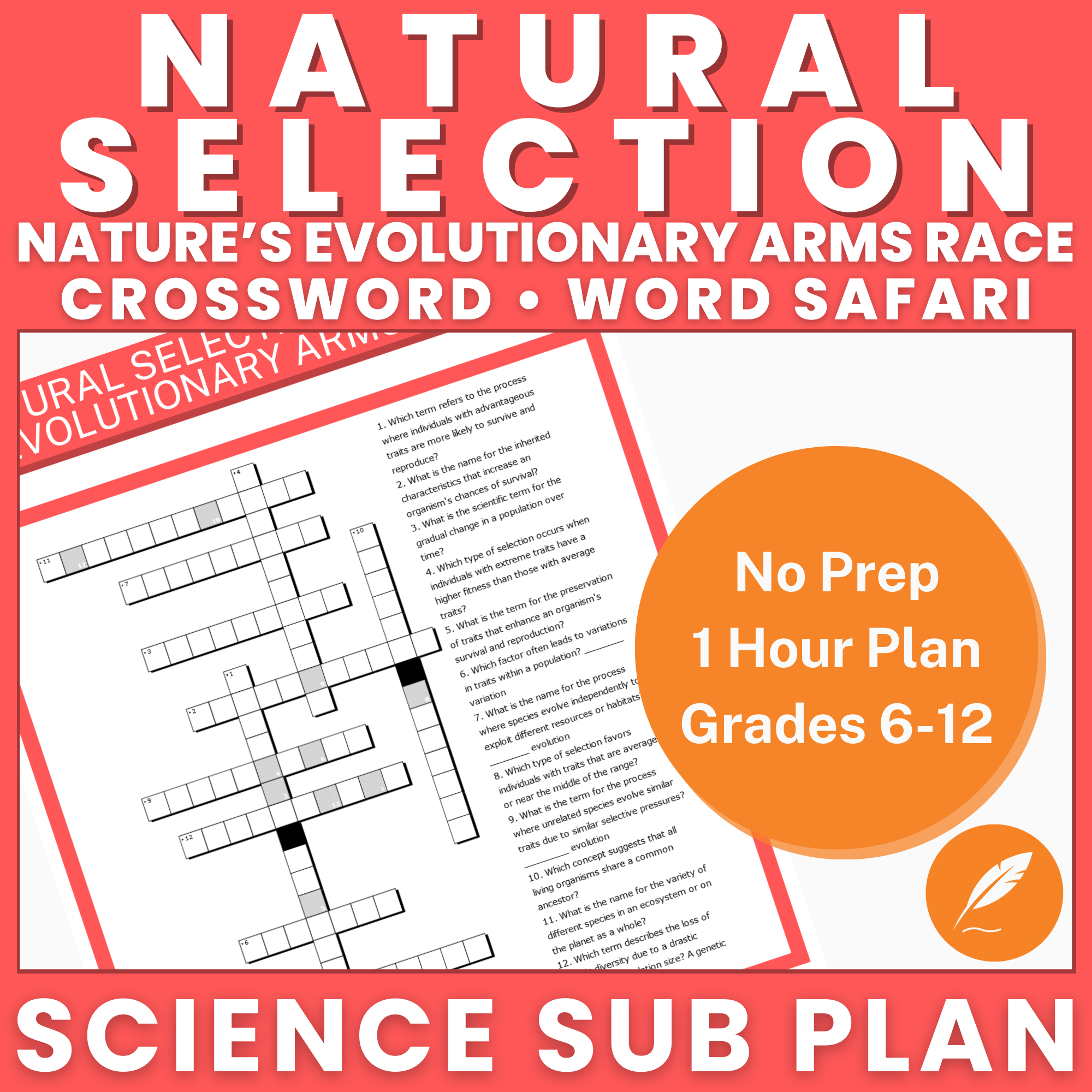
Grab this FREE Natural Selection Lesson Plan! Go beyond the textbook with engaging activities on coevolution, adaptation, and genetic variation. Perfect for US 6-12 science teachers looking to boost critical thinking and problem-solving skills.
Download your free resource today!
Artificial Selection: Humans Stepping in as the Selector
Sometimes, the force driving natural selection isn't Mother Nature at all—it's us! When humans intentionally breed plants or animals for specific traits, you call it artificial selection. It’s the same underlying mechanism as natural selection (variation is selected for and inherited), but the selection pressure is human desire, not environmental fitness. It's a great concept to introduce because it’s so relatable and clearly demonstrates the power of selection over generations, albeit in a highly accelerated way.
The Amazing Ancestry of the Dog
The domestic dog is probably the most famous example. Every breed you see, from the tiny Chihuahua to the massive Great Dane, descended from the gray wolf. Think about that huge range of variation! Through centuries of artificial selection, people chose wolves with desirable traits—tamer behaviour, certain coats, or herding instincts—and bred them together. This process, driven purely by human choice, created the incredible diversity of dog breeds you have today. It’s an undeniable, visible demonstration of the power of natural selection (applied artificially) to shape a species.
From Wild Mustard to Your Dinner Plate
For a food-focused example, consider Brassica oleracea, wild mustard. You wouldn’t put that tough, scrubby plant on your dinner table today, would you? But through human-directed artificial selection, farmers created broccoli (by selecting for undeveloped flower clusters), cabbage (terminal leaf buds), cauliflower (sterile flower clusters), and kale (large leaves). All those different vegetables come from one ancestral plant! It’s a fantastic, simple story that vividly illustrates the potential lying within genetic variation and how quickly selection can produce dramatic results, making it an excellent resource for a lesson on natural selection.
- Class Question: If you were breeding a new type of farm animal to survive in a rapidly warming climate, what three traits would you select for, and how would you implement your artificial selection program?
Your students will love the Evolutionary Arms Race! Get fun facts on the speed of change and tips to inspire exploration and problem-solving in science. #ScienceTips #ScienceClass #TeachingBiology @inspirationalscienceforsubs
The Speed of Change: When Natural Selection Works Overtime
One common misconception is that natural selection always takes millions of years. Sometimes, when the environmental pressures are intense, selection can happen very quickly—within a human lifetime, or even just a few years. It’s a compelling point to make, proving that evolution isn't just ancient history; it's a living, observable process happening right now. You could use this to really drive home the relevance of the topic to your US 6-12 students.
The Curious Case of Urban Wildlife
Look at cities. They are intense new environments, and animals living there are quickly adapting. City mice, for example, are evolving different tolerances to chemicals and have subtle genetic differences from their country cousins because they've had to quickly adapt to a diet of discarded human food and cope with a vastly different predator mix (like domestic cats instead of owls). This rapid adaptation is a real-world, modern example of natural selection under pressure. It's an exploration of how life persists even when faced with drastic changes.
Antibiotic Resistance: A Fast-Tracked Arms Race
You can’t talk about fast evolution without mentioning antibiotic resistance. When you use an antibiotic, it acts as a brutal selector. Any bacteria that happen to have a random variation that makes them slightly resistant will survive the drug and quickly multiply. Since bacteria reproduce so rapidly, this beneficial trait spreads through the population in days or weeks, not centuries. This phenomenon is a perfect, urgent example of natural selection in action, illustrating both its power and the problem-solving challenges it creates for humans. It’s a serious issue, but it perfectly models the core concepts.
- Class Question: Imagine a major disease suddenly appeared, and people who naturally produced a certain enzyme were immune. How quickly do you think natural selection would increase the number of people with that enzyme in the global population? What are the practical factors that would speed it up or slow it down?
Enjoyed the article?
Wrapping Up the Evolutionary Race
So there you have it: natural selection is far more exciting than just dry definitions. It’s the ongoing drama of the planet, where every organism, from the smallest bacterium to the largest whale, is locked in a relentless struggle for existence. You've seen that variation is the fuel, environmental pressure is the selector, and reproduction is the ultimate goal. You’ve looked at coevolution, artificial selection, and the surprising speed at which this process can operate. Hopefully, these specific examples and discussion points will help you inspire your students to engage in critical thinking and exploration when they next look at the living world. You’ll be helping them look beyond the textbook and truly appreciate the profound engine driving all biological change. You're giving them the tools for a limitless learning journey.
We hope this content will help you save time and inspire your students! That's what Inspirational Science For Subs is all about. Which of these examples do you think would be the most effective at getting your US 6-12 students excited about the power of natural selection? Have you used the Red Queen Hypothesis in class before? Let me know in the comments!