

Ever poured yourself a glass of water and thought about where it came from? Simple, right? But what about the water you don’t see? That’s what’s really fascinating! Here at Inspirational Science For Subs, you know your goal is to spark curiosity and go beyond the textbook. That’s why you’ll love this topic: virtual water. It's a fantastic, tangible way to introduce concepts like sustainability, global trade, and water scarcity to your students. Trust me, the sheer scale of the numbers will make their jaws drop. You see, every product, from the cotton T-shirt you’re wearing to the burger you had for dinner, requires a mind-boggling amount of water to produce. That unseen volume is what experts call virtual water. Think of it as the invisible water that travels the world hidden inside goods.
Understanding the concept of the virtual water footprint is brilliant for fostering critical thinking and problem-solving in your classroom. You won't have to waste time re-explaining the same old concepts because this topic is fresh, personal, and immediately relatable to your students' lives. It’s all about getting them to look at their everyday consumption—their electronics, their clothes, their food shopping—in a completely new light. This content is a tool you can use to keep your students engaged and thinking critically about the world around them. Hopefully, this information will help you save time and inspire your students to be more aware of their environmental impact. Now, let’s get into the specifics of this secret water!
More...
The Invisible Water Footprint of Food
Now, let’s get down to the truly unbelievable figures. The biggest component of the average person’s virtual water footprint is food. Honestly, the difference between items is staggering, and it makes for a brilliant class discussion. You might know that growing crops takes water, but do you know how much water? It's often hundreds, or even thousands, of times the weight of the actual product! It’s all the water needed for irrigation, processing, and all the steps from farm to plate.
Why Do Some Foods Need So Much Virtual Water?
Think about a nice, juicy steak. It’s a delicious treat, but the virtual water cost is immense. It’s not just the water the animal drinks; it’s the colossal amount needed to grow the feed it eats over its entire lifetime. Growing grain, alfalfa, or grass requires significant irrigation, and that all adds up. Contrast that with a bowl of vegetables, and you can see a massive difference in the water cost.
Here are a few fascinating examples that you can present to your class as a kind of 'Did You Know?' challenge:
- Beef: Producing one kilogram (about 2.2 pounds) of beef takes, on average, a whopping 15,415 litres of virtual water. That’s enough to fill an entire small swimming pool for just a few steaks!
- Chocolate: Everyone loves chocolate, but one small 100-gram bar requires around 1,700 litres of water. Most of that is in growing the cocoa beans.
- Coffee: A single cup of coffee? About 130 litres. Think about that next time you’re sipping a mug!
It’s completely mind-blowing, isn’t it? This isn’t about shaming anyone's dietary choices; it's about being informed. Knowing the virtual water figures allows you to make more thoughtful decisions. It’s a powerful lesson in resource allocation that connects directly to science concepts like the water cycle and agriculture.
Question for the Class: If you could magically reduce the amount of virtual water needed for just one of your favourite foods by 50%, which food would you choose and why?
Virtual Water in Your Wardrobe and Electronics
It’s not just what you eat; your wardrobe and the phone in your pocket also have a sizeable virtual water footprint. Most students wouldn't naturally connect their clothes or gadgets to water scarcity, so this is a great opportunity to broaden their thinking. Everything manufactured requires water in the raw material stage, the processing stage, and the cooling stages. That’s a ton of virtual water hidden in plain sight.
The Cotton Conundrum
Take cotton, for example. It’s a thirsty, thirsty crop. It's used in your jeans, T-shirts, socks—you name it. Making just one simple cotton T-shirt can require approximately 2,700 litres of virtual water. Yes, that’s right—2,700 litres! That’s equivalent to what a person is advised to drink over two and a half years! This fact alone is usually enough to stop a class dead in their tracks. It’s why fast fashion and throwing away clothes so quickly are so damaging from a water perspective. You're not just throwing away the fabric; you're discarding thousands of litres of precious virtual water that went into making it.
The same principles apply to the electronics that your students are glued to. Producing the raw materials for a mobile phone—mining metals, purifying silicon, manufacturing circuit boards—all requires vast quantities of virtual water. While the exact figures are complex and vary greatly, studies suggest that making an average smartphone can require around 1,000 to 1,500 litres of virtual water. It’s a brilliant way to discuss the true environmental cost of our throwaway consumer culture.
You can explain to your students that every time they choose to mend a piece of clothing, or use their phone for another year, they are, in effect, saving a huge amount of virtual water. It's a simple change in behaviour with a massive positive impact.
Question for the Class: Your favourite jeans require 8,000 litres of virtual water to produce. If you decided to buy high-quality jeans and wear them for four times as long as a cheaper pair, how much virtual water would you save over 10 years?
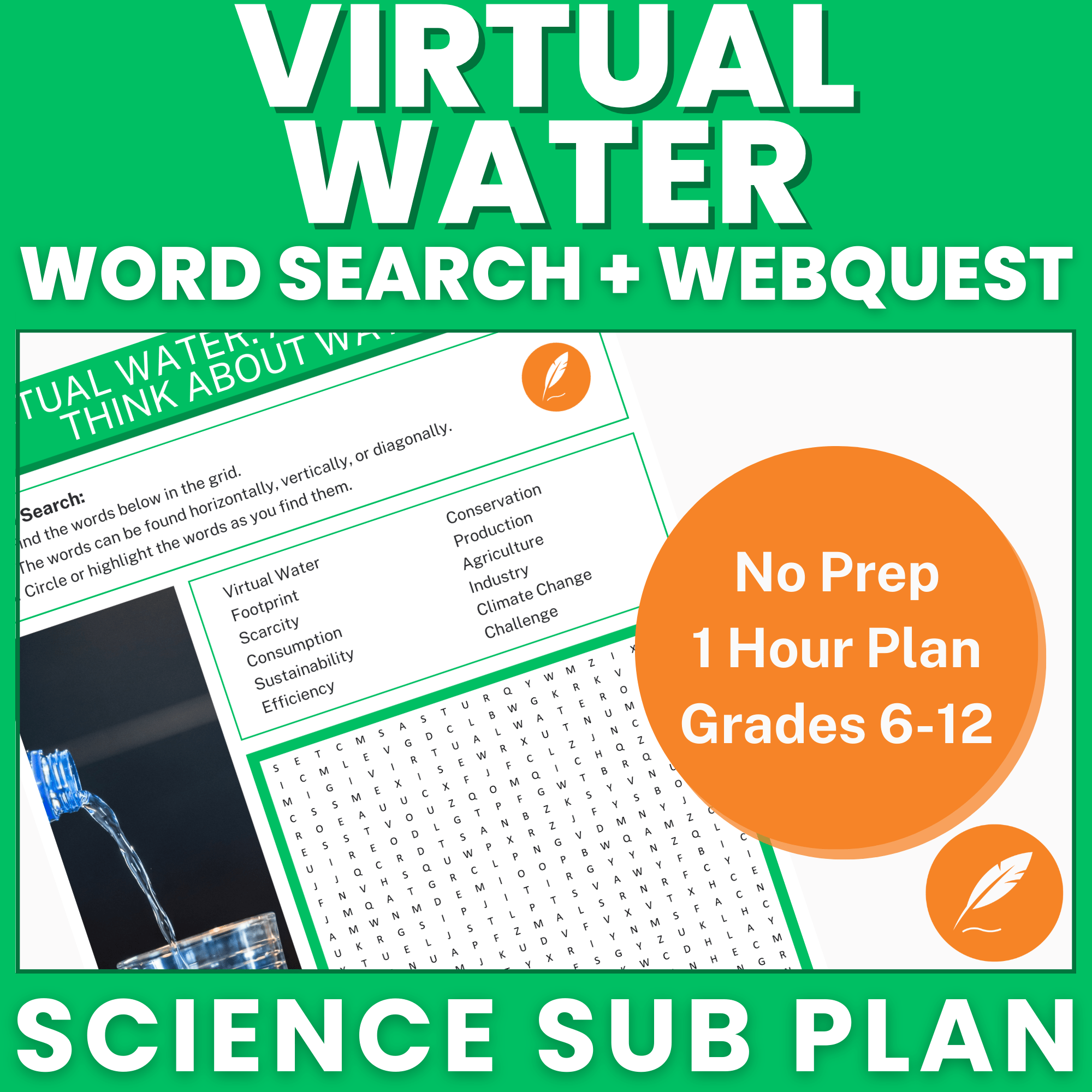
FREE Lesson Plan
Get your FREE Virtual Water Lesson Plan! This engaging resource helps US 6-12 students calculate the surprising, invisible water footprint of their food and clothes. Includes activity sheets for critical thinking and problem-solving, perfectly aligning with your science curriculum.
Download it now to inspire your students and spark discussions about global resource use!
The Global Virtual Water Trade
This is where the topic gets really interesting for older students and connects perfectly with geography and economics lessons. Virtual water isn’t static; it moves. When one country exports a tonne of wheat, they are also, in effect, exporting all the thousands of litres of virtual water it took to grow that wheat. This phenomenon is called the virtual water trade. It’s a massive, invisible global transaction happening every second.
The Hidden Flow of Water
The virtual water trade can be a really helpful tool for countries facing water scarcity. Say a country in a drought-prone area doesn't have enough rainfall to grow its own water-intensive crops, like rice or coffee. Instead of depleting its own scarce water resources, it can import those goods from a country with abundant water supplies. That imported food or product contains the virtual water that was used to grow it elsewhere. This effectively allows the water-scarce country to conserve its own precious domestic water.
It's a complex system, though, and it’s not without debate. Some argue that this trade puts immense pressure on the water resources of the exporting countries, especially if they are developing nations. It raises ethical questions about who owns and controls global water resources. Who decides which country should use its water to supply the world's beef, for instance? This discussion provides an excellent opportunity for your students to practise critical thinking and debate skills. It moves the conversation beyond their local area and makes them consider global responsibility.
It’s crucial for you to emphasise that the concept of virtual water is a framework for understanding resource use, not necessarily a judgement. But when you look at the major exporters—countries like the USA, China, and Brazil—you’re essentially looking at the world’s major water suppliers, even if they aren't shipping bottles of water.
Question for the Class: If a drought-stricken country had to choose between using its limited water supply for drinking and sanitation or for growing a cash crop to export, which would be the more ethical choice and what would the consequences be?
Did you know one T-shirt takes 2,700 litres of virtual water? Uncover the secret water hidden in your everyday items. Mind-blowing facts for science class! @inspirationalscienceforsubs #ScienceTeacher #VirtualWater #WaterFacts
Virtual Water in Perspective: Towards a Sustainable Future
So, now you've got the facts about the massive volume of virtual water hidden in everything from your cereal to your smartphone. It’s a powerful idea, isn’t it? The question then becomes: what can you do with this knowledge, and more importantly, what can your students do? This isn't about doom and gloom; it’s about inspiring change and creative problem-solving. This knowledge is an essential ingredient in promoting a more sustainable future.
Practical Steps for Reducing Your Virtual Water Footprint
By understanding the virtual water footprint of different items, you can encourage your students to make small, simple changes that collectively have a big impact. This connects perfectly with the "Beyond Limits" part of the Inspirational Science For Subs mission. It’s all about empowering the next generation to be solution-oriented.
Here are a few quick tips you could share:
- Be a Food Waste Warrior: Reducing food waste is a huge water saver. If you chuck out a burger, you’re not just wasting the food; you’re wasting over 2,400 litres of virtual water that went into producing it.
- Mend and Re-use: Extending the life of a cotton T-shirt from one year to two instantly saves 2,700 litres of virtual water. You could start a class project on repairing clothes!
- Thoughtful Consumption: Choosing products that are grown in water-abundant areas, or those with less intensive production methods (like choosing chicken over beef), can significantly alter a person’s virtual water impact.
The beauty of the virtual water concept is its direct, tangible connection to personal action. It shifts the focus from an abstract, global problem to the choices you make every single day. This is the kind of critical thinking that really matters. It's about empowering your students to see themselves as part of the solution to global resource challenges.
Question for the Class: What three small, practical changes could your family make this week to reduce your overall virtual water footprint, and how would you track the 'virtual' savings?

Enjoyed the article?
Conclusion: Empowering Students with Virtual Water Facts
Well, you’ve just taken a deep dive into the invisible world of virtual water! Hopefully, the fascinating and often surprising facts—like the 15,415 litres of water for a kilo of beef or the 2,700 litres for a T-shirt—have provided you with some fantastic material to spark discussion and exploration in your US 6-12 classrooms. This is a topic that sits perfectly within the ethos of Inspirational Science For Subs: encouraging critical thinking and problem-solving that goes beyond the classroom walls.
The concept of the virtual water footprint is such a powerful lens through which to view sustainability, global trade, and the environmental cost of our consumption. By introducing this idea, you’re not just teaching science; you’re cultivating global citizens who understand the true value of Earth's most precious resource. You're giving them the tools to make informed, responsible choices every time they go food shopping or buy a new item of clothing. Ultimately, you’re inspiring them to recognise that their individual actions have a global resonance, and that’s the most important lesson of all.
We hope you found this guide helpful for keeping your students engaged with a fresh, relatable science topic. What other water-intensive items do you think your students would be most surprised to learn the virtual water footprint of? Let us know in the comments below!