

Secondary science classrooms can sometimes feel like a race against the clock. You have a mountain of content to cover, complex concepts to explain, and students who often wait for you to give them the right answer rather than finding it themselves. But what if you could shift that dynamic? What if every single day felt like a discovery rather than a lecture?
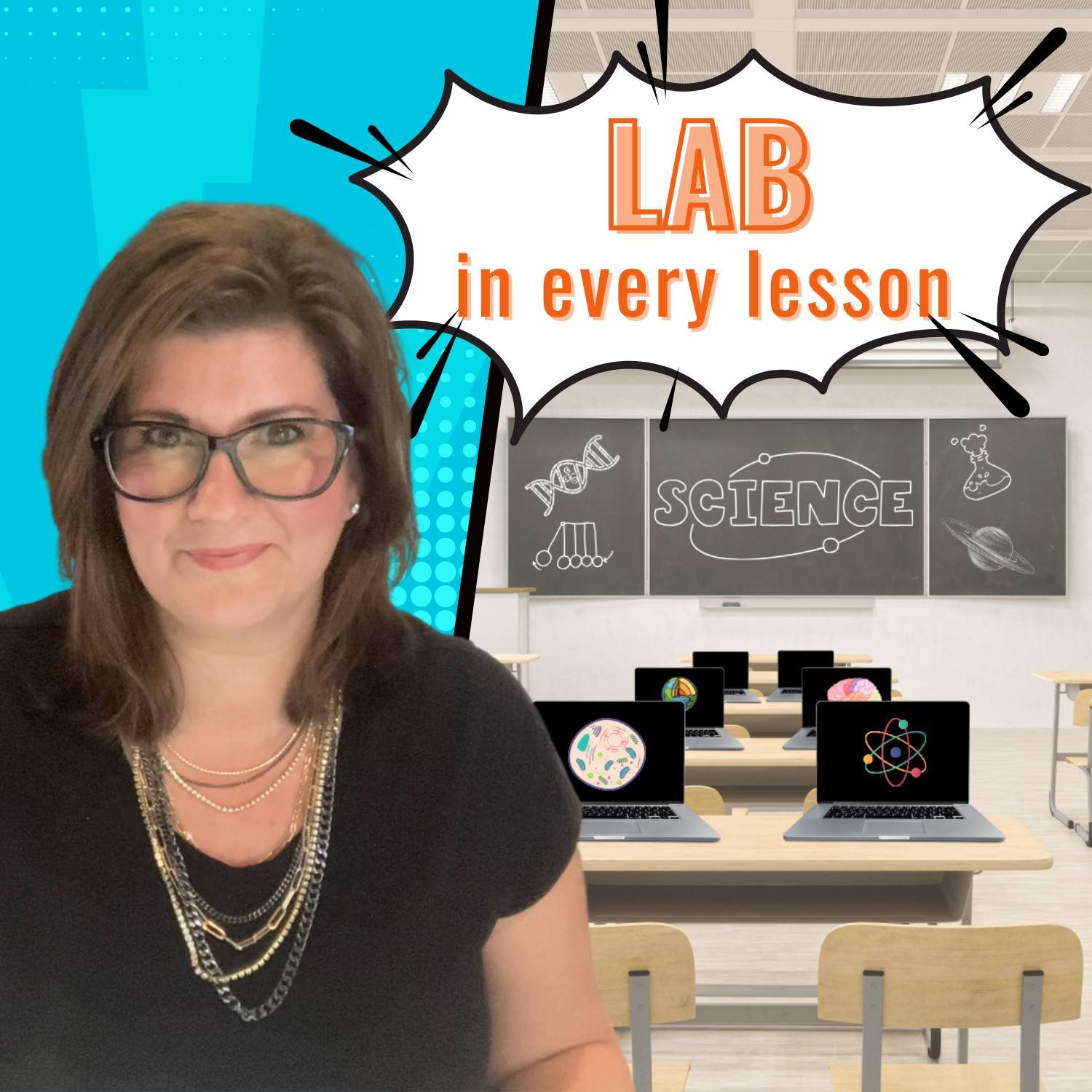
I recently had a fascinating chat with Lisa Karosas from Lab In Every Lesson. Lisa has spent over 15 years refining how we teach science, especially in the tricky world of online learning. Her approach is a breath of fresh air for anyone looking to spark genuine curiosity. You'll find that her methods aren't about fancy equipment or massive budgets; they are about making student thinking visible.
The goal of this post is to help you save time and inspire your students by rethinking what a “lab” actually is. Lisa’s insights are perfect for those teaching US grades 6-12 who want to move beyond the textbook and turn their students into real investigators. Why settle for passive listening when you can have a room full of active sense-makers?
More...
The Power of Visible Learning and Active Sense-Making
When Lisa first started teaching, she noticed a frustrating pattern. She’d deliver a lesson, but she couldn't actually tell if the students were thinking. Participation looked like a few clicks or a poll response, but was the learning actually happening? This led her to a massive pivot in her career. She moved away from simply explaining facts and toward a model of visible learning.
Intentional Tasks for Deeper Thinking
Lisa explains it beautifully: “I started digging into research and came across the principles of visible learning—that learning should be observable as it happens and supported by intentionally designed tasks that promote deeper thinking.” This isn't just a theory; it’s a practical way to run a classroom. By using secondary science teaching strategies that focus on sense-making, you change the role of the student. They are no longer just consumers of information; they are creators of knowledge.
Instead of delivering information, you plan activities where students work with data and models. This aligns perfectly with the Next Generation Science Standards (NGSS) and their focus on three-dimensional learning. “Suddenly I could see learning as it was happening and archive it to reflect on what students understood, what they misunderstood, and how I should adjust the next lesson,” Lisa says. This approach allows you to catch misconceptions early.
Question for your class: If we could see thoughts like we see clouds in the sky, how would your “learning cloud” look right now—stormy, clear, or a bit foggy?
“
The goal isn’t speed or correctness on the first try—it’s helping students experience science as a process they can participate in.
Lisa Karosas - Lab in Every Lesson
Redefining the Lab Experience for Every Day
We often think of labs as big, messy events that happen once a fortnight if we're lucky. But Lisa suggests a different path. She transformed the “lab” from a bulky packet into a single page focused on recording observations. This shift is one of those secondary science teaching strategies that reduces overwhelm for both you and your students.
Removing Barriers to Student Participation
“The smaller scope removed the overwhelm that often shuts students down before they begin,” Lisa notes. When the task feels manageable, participation becomes universal. You can have everyone working on web-based evidence or simulations, making sense of what they see in real time. It removes the barrier of needing vast prior knowledge. Students start with what they observe, which levels the playing field for every learner in the room.
This also changes how students work together. Lisa found that when students analyse slightly different data sets and then pool their results, the “Aha!” moments happen naturally. She gives a great example: “In an isotopes lesson each student analyses a different atom. Individually they notice changes, but when they pool their data, they realize the defining feature never changes: the number of protons.” Isn't it more powerful when they find the rule themselves?
Question for your class: If you could only use your eyes—no talking and no books—what is the most complicated thing you think you could figure out just by watching it?
Science is a practice, not just a collection of facts. Learn how to empower your students as sense-makers in the latest Teacher Spotlight. #EdChat #ScienceChat #STEM @inspirationalscienceforsubs
Neutralizing the Science Saboteur with Models
We all have that one topic that makes students hit a wall. For many, it’s predicting ion charges. They try to memorize the shortcuts on the periodic table, but if the memory fails, the logic disappears. Lisa’s “secret weapon” here is to delay the shortcut entirely. This is one of those secondary science teaching strategies that builds long-term confidence.
Noticing Patterns Through Bohr Models
Instead of starting with the “how,” she starts with the “why” using Bohr models and box diagrams. “The periodic trend isn’t introduced—it’s noticed,” Lisa explains. When students spend time working through stability and valence electrons, the pattern becomes unavoidable. They aren't just remembering a rule; they are understanding a consequence of atomic structure.
This method transforms the student experience. They stop being dependent on a cheat sheet and start acting like scientists. Lisa points out that “if students forget the shortcut later, they still have a reliable method: rebuild the model and reason through it.” This kind of resilient thinking is exactly what we want to cultivate. It moves science from a collection of facts to a practice they can master.
Question for your class: If you were a tiny electron looking for a home, what would make one atom look more “stable” and inviting to you than another?
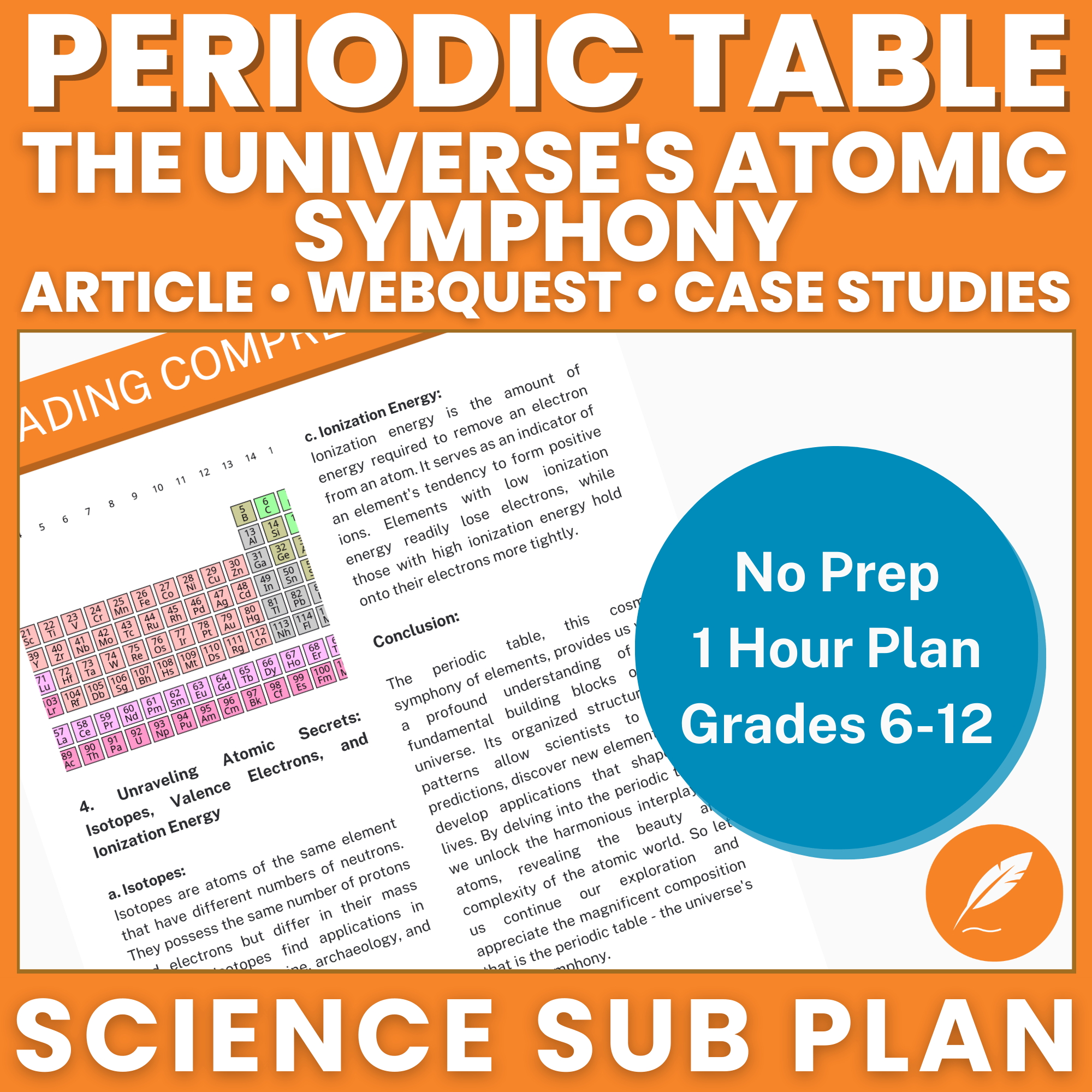
FREE Lesson Plan
Level Up Your Periodic Table Lessons.
If you want to help your students "notice" the patterns just like Lisa suggests, download our Free Periodic Table Resource.
It’s designed to help your Science Ninjas master the elements without the memorisation headache!
Grab your copy today and watch your students transition from confused observers to confident investigators!
Quick Hooks and Digital Tools for Instant Engagement
Sometimes the energy in the room just dips. Maybe it’s a rainy Tuesday or the last period on a Friday. Lisa has a 5-minute mission to fix this. She pauses everything and asks one simple question: “What do you SEE?” This shift from “give me the answer” to “tell me what you observe” instantly lowers the stakes and invites everyone back into the conversation.
Tools That Make Participation Universal
To support this visible learning, Lisa leans on digital tools that allow her to see everyone's thinking at once. “For me that’s Seesaw, because I can instantly scan an entire class set of responses instead of waiting for volunteers,” she says. It makes participation mandatory but in a supportive way. You aren't guessing who is following along; you can see it on your screen. It turns a standard lesson into an interactive portfolio of sense-making.
On the physical side, she uses stickers or badges that recognize science practices rather than just “being right.” “They unmistakably recognize the behaviours scientists use,” Lisa mentions. This small tweak shifts the classroom culture. Students learn that the goal is thinking carefully and improving their explanations, not just racing to a finish line. It’s about the process, not just the product.
Question for your class: If we turned our classroom into a giant laboratory for just five minutes, what is one thing in this room you've never really looked at that deserves an investigation?
Enjoyed the article?
The Lesson in a Box for Substitutes and Success
Walking into a room as a substitute teacher can be daunting, but Lisa’s structure makes it seamless. Because her lessons follow a consistent pattern of guided inquiry, the students already know the routine. This “Lesson in a Box” approach ensures that real learning continues even when you aren't there.
Establishing Consistent Inquiry Routines
“The adult in the room manages pacing and questions while the structure manages the learning,” Lisa explains. Since the tasks begin with sense-making rather than needing a lecture on prior knowledge, the students can get to work immediately. They aren't waiting for the sub to explain a complex chemical reaction; they are analysing the evidence provided to them. It keeps the students on task and the teacher sane.
This consistency is vital. When students are used to analysing data and recording their reasoning every day, a substitute day doesn't become a “day off.” It’s just another day of science. The technology supports the evidence, and the written thinking keeps the focus sharp. To get started with this yourself, you can grab Lisa's LESSon Plan Template to see how she structures these interactive sessions.
Question for your class: If a robot took over this class for one hour, what is the one “unwritten rule” about how we solve problems that you'd have to program into its brain?
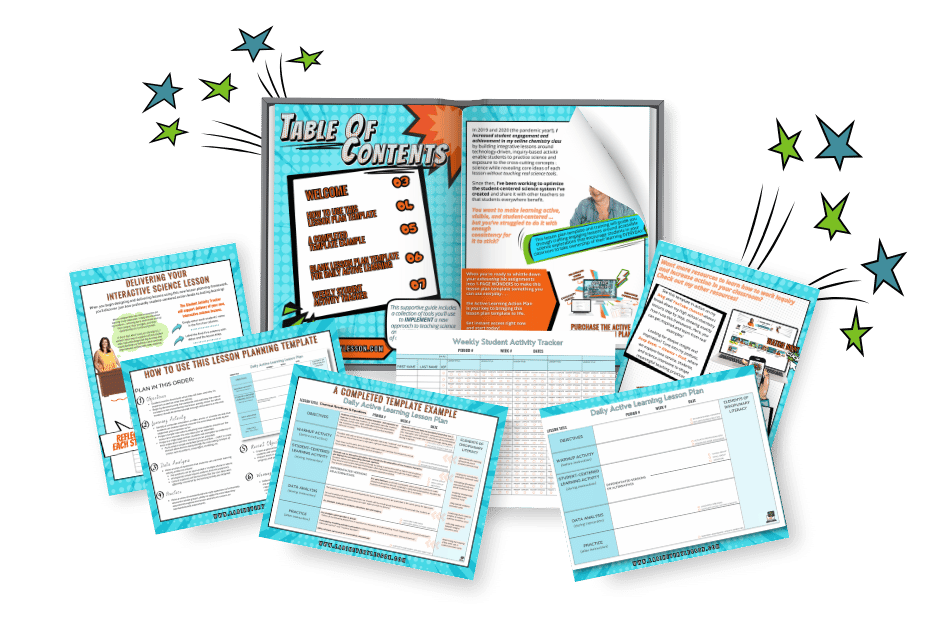
FREE Science LESSon Plan Template
This isn't just another checklist; it’s a strategic framework designed to shift students from passive listeners to active investigators.
It’s the perfect tool for any secondary science teacher looking to implement three-dimensional learning without the usual planning overwhelm.
Download it today and start building a classroom where the ideas come from the students’ reasoning, not just your explanation!
Advice to Your Younger Self and Final Thoughts
Looking back on her career, Lisa wishes she had known that real scientific thinking isn't instant. We often expect students to jump to the conclusion as fast as we do, forgetting that we've had years of practice. “They need repeated opportunities to observe, reconsider, and try again before ideas become clear,” Lisa reflects.
Embracing the Nature of Science
This realization has changed how she designs resources. The goal isn't speed; it’s the process of revision and discussion. “The goal isn’t speed or correctness on the first try—it’s helping students experience science as a process they can participate in,” she says. This mindset shift takes the pressure off both the teacher and the student. It allows for mistakes, which is where the best learning usually happens anyway.
Lisa’s approach reminds us that science is a living, breathing practice. By using secondary science teaching strategies that focus on visible learning and active sense-making, you can transform your classroom into a place of constant discovery. It’s about giving students the responsibility to uncover ideas for themselves.
What part of your science curriculum do you find hardest to make “visible” to your students? Have you tried using models before shortcuts, or do you have a go-to “What do you see?” hook that never fails? Leave a comment below and let’s share some ideas!