

As you know, my goal here at Inspirational Science For Subs is to make sure your classroom remains a place of wonder, even when life gets hectic. I am so excited to introduce you to Laney Hill, the creative force behind Laney Lee Science. Laney has spent years perfecting the art of middle school science student engagement, specifically focusing on creating rigorous materials that save teachers from the late-night planning grind. Her mission is simple: “to provide rigorous educational material for every topic in middle school science so that teachers always have somewhere to turn when they can't find the time to create high quality instructional materials on their own.” We hope this content will help you save time and inspire your students by showing you how to put the power back into their hands.
More...
Middle School Science Student Engagement Through Meaningful Choice
Laney found that her middle school science student engagement skyrocketed the moment she stopped telling students exactly how to show what they knew. Instead of a one-size-fits-all test, she started offering options. “Instead of one standard assessment, students could create models, write explanations, design experiments, or present visually,” Laney explains. By leaning into these preferences, you allow students to play to their strengths, which naturally leads to more pride in their final product.
Building Autonomy in the Science Lab
When you give students autonomy, you aren’t just making your life easier; you are teaching them how to take ownership. Laney noticed that “engagement took off when I introduced meaningful choice in how students demonstrated understanding.” Whether they prefer working solo or in a group, or choosing between paper and screen, that sense of control is a massive driver for middle school science student engagement. It turns the classroom from a place where things happen “to” them into a place where they make things happen.
Scaffolding for Success
It isn't just about giving a choice; it’s about making sure the work is accessible. Laney creates resources that every student can actually do, which is her top tip for classroom management. She notes that “students rarely act up when they have work they CAN do!” By providing different entry points, you ensure that middle school science student engagement remains consistent across the whole room, regardless of starting ability. Giving students agency is a proven way to increase intrinsic motivation in the classroom, as they feel more connected to the outcome of their work.
Question for your class: If you could choose any way to show me what you’ve learned today—like a song, a comic strip, or a Minecraft build—what would you pick and why?

“
My mission is to provide rigorous educational material for every topic in middle school science so that teachers always have somewhere to turn when they can't find the time to create high quality instructional materials on their own.
Laney Hill - Laney Lee Science

Mastering Scientific Reasoning for Middle School Science Student Engagement
One area where middle school science student engagement often falters is during scientific writing. We’ve all seen it: students can make a claim and they can find evidence, but they hit a wall when it’s time for the “Reasoning” part of a CER (Claim, Evidence, Reasoning) response. Laney observes that “students are often comfortable making a claim and listing evidence, but they struggle to explain why that evidence supports the claim.” Her secret weapon for this is to provide more scaffolding than you might think is necessary at first.
Deep Dives into CER Scaffolding
To fix the reasoning gap, Laney provides versions of assignments where the claim or evidence is already written for them. She admits, “My 'secret weapon' has been to dive even deeper into CER. I provide more scaffolding now than ever before.” This includes providing “sample complete student responses that need feedback or improvement.” This “critique mode” is a brilliant way to boost middle school science student engagement because it feels less like a writing chore and more like a puzzle to be solved.
Making Science Writing a Routine
The key is consistency. By making “CER a part of our weekly routine,” the “scary” part of scientific writing disappears. Laney has seen her students grow in confidence as they stop guessing and start thinking like real scientists. She says, “students are finally becoming more confident with their scientific writing. It's been a joy to see!” When you remove the mystery from the process, you remove the frustration that leads to disengagement.
Question for your class: If you had to convince someone that a mysterious footprint belonged to a dragon using only three pieces of evidence, how would you explain your logic?
Struggling with the "Reasoning" in CER? Discover Laney Lee’s scientific reasoning secrets to skyrocket middle school science student engagement and confidence! #ScienceTeacher #CER #MiddleSchoolScience @inspirationalscienceforsubs
The 5-Minute Energy Pivot for Middle School Science Student Engagement
Sometimes the energy in the room just feels “off,” doesn't it? Laney’s go-to “zero-prep” hook to fix this is a simple “complete the picture” drawing. She starts the class with a partial image and asks the students to finish the drawing. It sounds basic, but it’s a fantastic way to reset middle school science student engagement instantly. “I used to start my class every day with a complete the picture drawing. We'd always showcase some of the best ones which encouraged buy in,” she recalls.
Lowering the Stakes to Raise Participation
It is incredibly hard for a student to stay grumpy or checked out when they are busy turning a misshapen line into a “hilariously misshapen T-rex!” These drawing prompts act as a palate cleanser for the brain. They encourage buy-in because there is no wrong answer. This small investment of time pays off by making students more receptive to the actual science lesson that follows, ensuring middle school science student engagement stays high through the transition.
The Power of Play in Science
Incorporating art and creativity isn't just “fluff.” Laney is a firm believer that you can never have enough supplies. When asked about her must-have physical tool, she insists it “would have to be art supplies! I can never have enough!” Giving students five minutes to be silly relaxes the atmosphere. Once the “stress” of the school day is lowered, middle school science student engagement becomes much easier to maintain.
Question for your class: If I drew a giant circle on the board right now, what is the most scientific thing you could turn it into in sixty seconds?
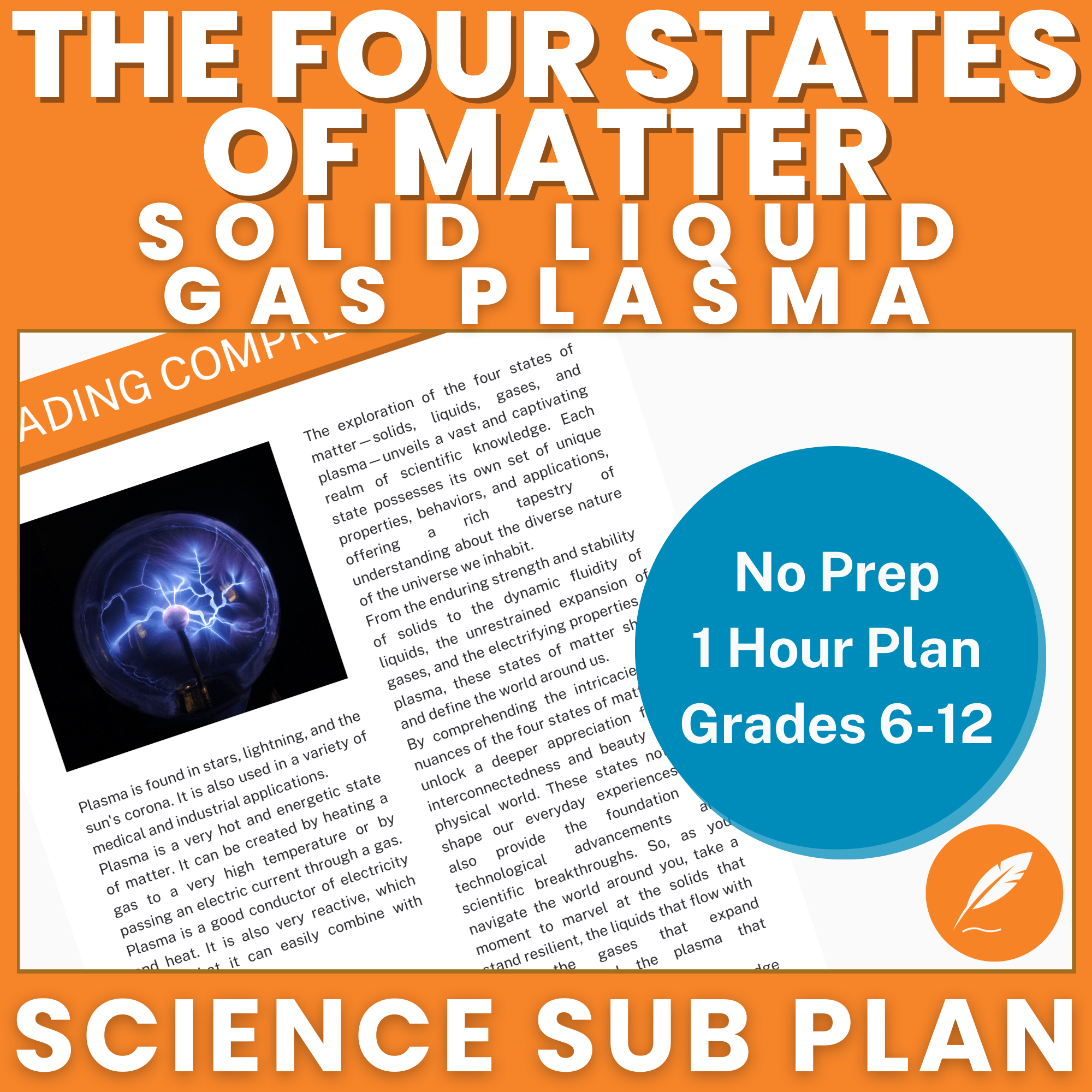
FREE Lesson Plan
Looking for a high-quality, zero-prep science resource? Download this free States of Matter Reading Comprehension pack designed for middle and high school science student engagement. This isn't just a simple reading; it includes debate and discussion topics to help your students master scientific reasoning and critical thinking.
Perfect for sub plans, independent work, or as a literacy-rich supplement to your chemistry unit.
Grab your FREE copy now and see why these resources are a secret weapon for classroom management and student confidence!
Essential Tools for Middle School Science Student Engagement
If you are looking to upgrade your digital toolkit, Laney has a clear favourite. “I'm obsessed with Peardeck, so I'd always find money in the budget for that as a digital tool!” It allows you to turn a static presentation into an interactive experience where every student can respond in real-time. This is a massive win for middle school science student engagement because it prevents the “hide and seek” behaviour where only the same three students answer every question.
The No-Prep Solution for Subs and Stressed Teachers
Laney’s best-selling resources are her reading comprehension sets, and for good reason. “They're zero prep, so anyone could use them in a pinch!” she says. But these aren't just simple recall worksheets. “I include lots of activities from data analysis to word maps to really get students thinking about the material,” she explains. This ensures that middle school science student engagement stays high and the thinking stays deep, even when a substitute teacher is leading the room.
Scaling the Universe in Your Classroom
For those teaching space science, her Build a Scale Model of the Solar System resource is a must-have. She describes it as “always a crowd favorite and definitely one they'll remember for a while!” This kind of hands-on work is vital for middle school science student engagement because it takes abstract, massive concepts—like the distance between planets—and makes them tangible.
Question for your class: If we had to build a model of the entire school using only things we can find in this room, what would be the hardest part to represent?
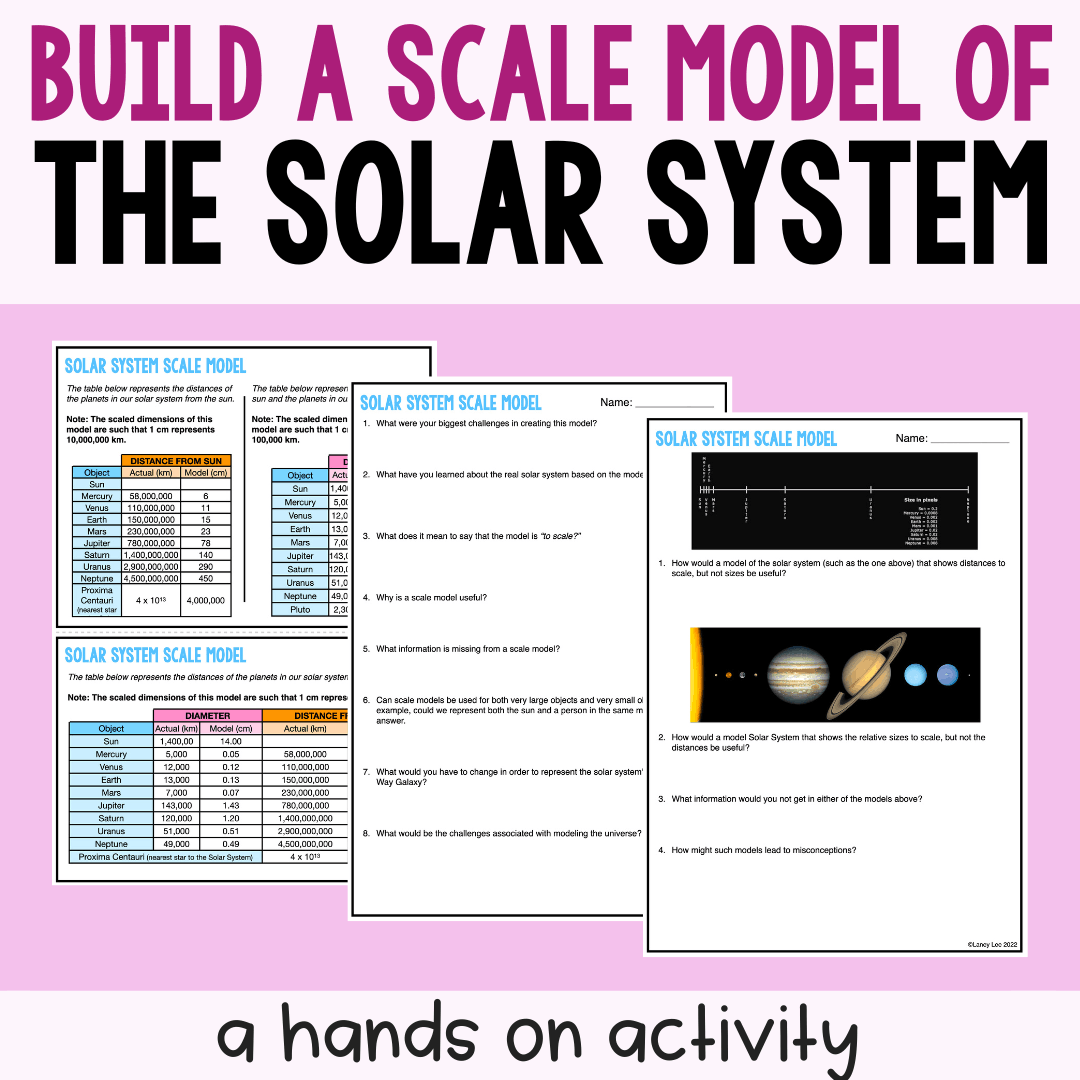
FREE Lesson Plan
Scale the Universe Right in Your Hallway.
Ever noticed how textbook diagrams make the solar system look... crowded? This hands-on activity fixes that misconception by letting your students feel the true vastness of space. Whether you’re pacing it out on a football field or scaling it down for the classroom, watching the "wow" moment when students realise just how far Neptune is from the Sun is an experience they won’t forget. It’s not just a craft; it’s a rigorous, data-driven exploration of scale and proportion that turns abstract numbers into a tangible reality.
Zero Prep Reading and Solar System Models
If you want to try out Laney’s style, she has some incredible resources ready for you. Her States of Matter Reading Comprehension Worksheets are a perfect place to start. Laney notes that the “questions included with this States of Matter resource encourage students to make connections using the materials they have read,” rather than just skimming for bold words. This is a great way to test the waters of middle school science student engagement in your own room.
Closing the Gap with Accessible Resources
The biggest takeaway from Laney’s experience is that engagement and accessibility go hand in hand. Reflecting on her early career, she admits, “I wish I had more confidence in classroom management. In a lot of ways, this has influenced my desire to create resources that are engaging and accessible to all students.” When you provide the right scaffolding and a bit of choice, middle school science student engagement becomes the natural state of the classroom rather than a constant struggle.
Visualising the Tiny and the Massive
Beyond reading, Laney encourages using models to bridge the gap between what we see and what we can't. Whether it's atoms or galaxies, her Build a Scale Model of the Solar System activity helps students visualise the impossible. This focus on scale and proportion is a cornerstone of middle school science student engagement because it satisfies that innate curiosity about our place in the universe.
Question for your class: If you could shrink the entire Earth down to the size of a marble, what would happen to the moon and the sun in your model?
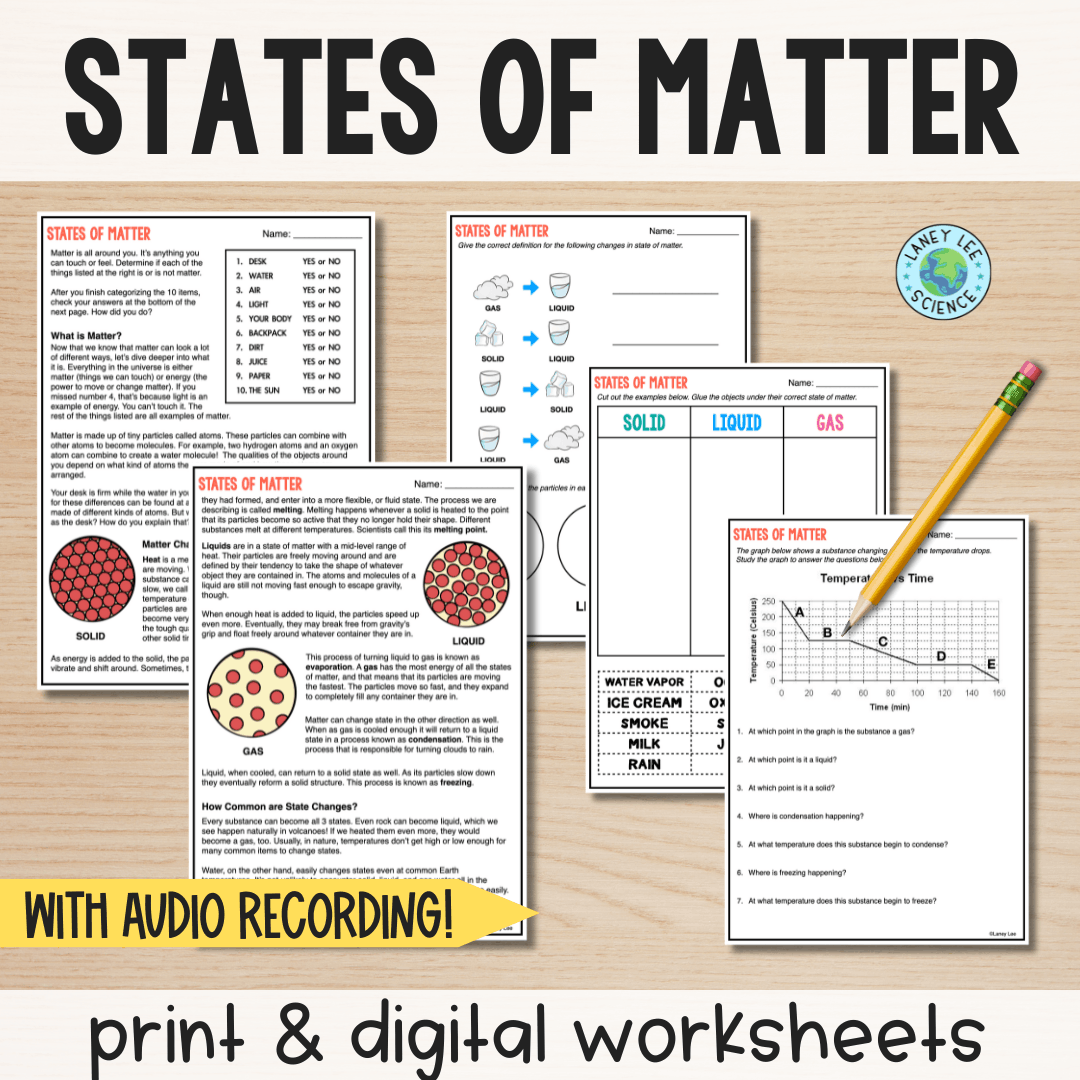
FREE Lesson Plan
Bridge the Gap Between Literacy and Logic.
Scientific reasoning doesn't just happen during experiments; it starts with how students process information. These reading sets are a masterclass in scaffolding, helping students bridge the gap between reading a text and understanding the underlying science of particles. By focusing on vocabulary through word maps and evidence-based questions, you’re giving your students the tools to master CER (Claim, Evidence, Reasoning) in a low-stakes, highly effective format.
Summary: Lessons in Engagement from Laney Lee Science
It has been such a joy to share Laney Hill’s insights with you today. From the power of choice to the “secret weapon” of CER scaffolding, her approach to middle school science student engagement is all about making the classroom a place of active, accessible learning. She proves that you don't need a huge budget to inspire your kids—sometimes you just need some art supplies, a good drawing prompt, and the right reading material to keep things moving. By focusing on autonomy and pride, you can transform your lab into a space where students take the lead.
I’d love to know what you think about Laney's approach! Have you ever tried giving your students a choice in how they are assessed, or do you find that a structured test is still your go-to? Laney’s “complete the picture” drawings are such a fun way to reset the energy—do you have a similar 5-minute trick for middle school science student engagement? Also, Laney’s focus on CER reasoning is a game-changer; how do you help your students bridge the gap between evidence and logic? Leave a comment below and let’s get the conversation started!
Enjoyed the article?