

While our mission here at Inspirational Science For Subs is to make sure you never have a “wasted” instructional day, I know that true magic happens when a teacher finds a way to pull every single student into the story of science. Today, I am absolutely thrilled to introduce you to Kasi and Jess, the powerhouse duo behind Surviving In Secondary. They’ve spent years working side-by-side in alternative education, a setting where you quickly learn that if you don't have a plan for engagement, you don't have a plan at all. Their insights into reaching students who struggle with motivation are pure gold for any secondary educator.
We’re going to look at how they use self-checking tools and a healthy dose of competition to transform the classroom. I hope this content will help you save time and inspire your students, whether you’re in your own lab or stepping into a new one as a guest teacher. Kasi and Jess aren't just about “getting through” the curriculum; they are about making sure students actually own their learning.
More...
How to Boost Secondary Science Student Engagement Using Self-Checking Tools
When you chat with Kasi and Jess, you realise their brand was born out of a very real need to support fellow educators. Starting their journey together in 2022, they saw that many secondary teachers were drowning in the day-to-day grind of manual marking and disengaged learners. As they put it, “together, we could help other educators not only survive, but thrive in providing engaging and unique curriculum supports for the secondary classrooms.”
Fostering Independence in Alternative Education Settings
In an alternative education environment, traditional lectures can feel like an uphill battle. Kasi and Jess found that the key to unlocking the room was fostering independence. “We have found that self-checking resources and gamified/competitive resources work for our students,” they explain, noting that these tools “engage them in the content, growing their independence as well as fostering their curiosity.” When you give a student a resource that lets them know immediately if they are on the right track, their anxiety drops and their focus goes up.
Reducing Teacher Workload Through Automated Feedback
One of the biggest drains on your energy is the constant cycle of grading and giving the same feedback over and over. By using these self-checking resources, you're effectively cloning yourself in the classroom. The tools handle the basic “right or wrong” checks, allowing you to spend your time having deeper conversations with students who are stuck on the more complex parts of the lesson. It’s a win for their autonomy and a win for your sanity.
Question for your class: If you could have a small device that whispered “correct” or “try again” every time you made a choice in life, would that make you feel more or less confident?

“
Our mission is to help other educators not only survive, but thrive in providing engaging and unique curriculum supports for the secondary science classroom.
Kasi & Jess - Surviving in Secondary

Characteristics of Life Lesson Ideas for Better Secondary Science Student Engagement
Ask any biology teacher about the one topic that consistently trips students up, and they’ll likely point to the Characteristics of Life. It sounds simple on paper, doesn't it? But once you get into the weeds of “what makes something truly alive,” students often get muddled. Kasi admits, “No matter how many times/ways I teach it, they always get confused.” To tackle this, they developed a “secret weapon” called the Life on Trial activity.
Turning Classroom Debates into Critical Thinking Exercises
Instead of a boring lecture, they turn the lab into a courtroom. “Students have to argue if different items are living or non-living and provide evidence,” Kasi explains. This is a brilliant way to drive secondary science student engagement because it forces students to use critical thinking beyond just the science concept. They aren't just reciting a list; they are applying the concept to messy, real-world examples. This kind of active debate ensures the information sticks long after the bell rings.
Identifying the Seven Pillars of Biological Organisms
Through this trial, students naturally begin to look for core characteristics like respiration, movement, and sensitivity. But because they are looking for “evidence” to win their trial, they engage with these definitions on a much deeper level. It stops being a list to memorise and starts being a set of criteria they actually understand and can apply to anything from a houseleek to a virus. It builds a bridge between abstract theory and the living world around them.
Question for your class: If a scientist discovered a crystal that could grow and react to heat, but couldn't reproduce, should we put it on trial for being “alive”?
Move from daydreaming to deciphering! Gamified tools are the ultimate secret weapon for consistent secondary science student engagement. #EdTech #ScienceTeaching #TeacherTips @inspirationalscienceforsubs
Using Google Sheets for Interactive Secondary Science Student Engagement
We’ve all seen students “zone out” when faced with a static digital worksheet. Kasi and Jess solved this by creating their “Cipher Pursuit” series. These are interactive Google Sheets where secondary science student engagement is built directly into the mechanics of the task. As they describe them, “our google sheets Cipher Pursuit activities provide self-checking responses while unlocking a cipher to solve a riddle or code word.”
Creating a 'Stressfun' Learning Environment with Ciphers
If a student enters a correct answer, a portion of a cipher is revealed. If they’re wrong, nothing happens, prompting them to go back and re-read. This instant feedback loop is a game-changer for classroom management. “Students get instant feedback for their responses with a little fun twist at the end,” the duo notes. This keeps the “stressfun” levels high as students race to solve the final code, making the learning process feel like a high-stakes mission.
Solving Ecological Puzzles Through Gamified Data Entry
Take their Ecological Succession Reading Passage and Cipher Pursuit, for example. Students have to navigate the stages of primary and secondary succession to unlock the code. It turns a concept that can sometimes feel abstract into a tangible puzzle. You won't have to waste time re-explaining the same thing because the sheet is doing the initial coaching for you. It transforms the screen from a passive window into an active laboratory.
Question for your class: If you were sending a secret message to another planet about Earth’s environment, would you use words, pictures, or a mathematical code to explain it?
Biology Teaching Strategies for Consistent Secondary Science Student Engagement
Sometimes, the best way to keep the energy up in a secondary lab is to offer a different kind of focus. Kasi and Jess are big fans of “Color by Code” practice. While some might think colouring is for the younger years, it’s actually a sophisticated social-emotional learning tool for teenagers. They believe these resources “blend content and social-emotional learning by incorporating a brain break into the assignment.”
Blending Social-Emotional Learning with Science Content
This blend of content and creativity is a fantastic way to maintain secondary science student engagement. It allows the students to process the heavy science of things like their Photosynthesis Color by Code Biology Worksheet while doing something tactile and relaxing. By the time they finish their diagram, they've subconsciously reinforced the connections between the different parts of the biological system they're studying.
Using Brain Breaks to Improve Information Retention
The beauty of a brain break activity is that it prevents cognitive overload. When students reach that point where they simply can't absorb any more data, switching to a “Color by Code” task allows their brain to file away what they've just learned. It’s a great way to differentiate for different learning styles too. When you give them a choice in how they spend their time, you’ll find they are much more willing to tackle the harder, technical questions later.
Question for your class: Why do you think your brain sometimes finds it easier to solve a difficult problem while your hands are busy doing something else, like drawing or colouring?

Enjoyed the article?
Effective Science Sub Plans to Maintain Secondary Science Student Engagement
As an ex-teacher who focuses on sub-ready resources, I was particularly impressed by Kasi and Jess’s “Lesson in a Box” philosophy. They recommend a three-part structure that ensures secondary science student engagement doesn't dip when the regular teacher is away. “Lessons for subs should have three available parts to keep the time moving,” they suggest.
The Three-Part Mission for Successful Guest Teaching
- The Hook: “First, either a whole class (or individual if the sub is uncomfortable) reading passage.”
- The Deep Dive: “Next, individual questions on the passage.”
- The Finisher: “Lastly, something fun, like a word search to review key terms, but also provide a fun puzzle.”
This “three-part mission” prevents the students from finishing early and finding their own (often disruptive) ways to stay busy. It provides a clear beginning, middle, and end to the lesson that feels intentional rather than like “filler.”
Streamlining Classroom Management with Ready-to-Go Bundles
For example, their Cell Theory Activities Bundle uses this exact flow. It gives a guest teacher a clear roadmap to follow, ensuring that the students stay on task and the learning continues without a hitch. When the instructions are this clear, the likelihood of behaviour issues drops significantly. You can take your leave knowing that your students are still having a productive hour and your classroom environment is being respected.
Question for your class: If you were the teacher for a day and had to pick one “fun” way to prove your students actually learned the lesson, what would your challenge be?
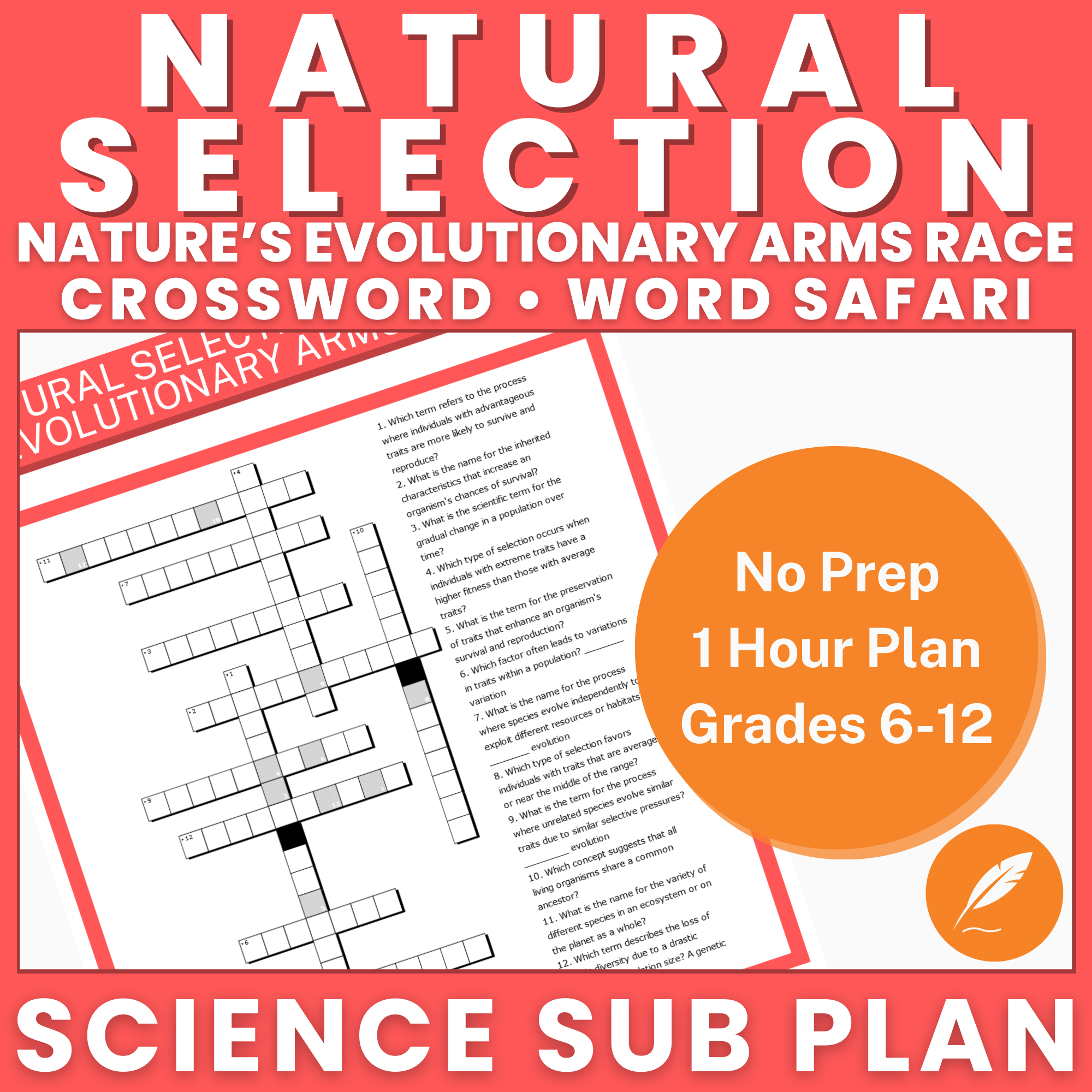
FREE Lesson Plan
Grab these FREE Evolution Bell Ringers to simplify your biology lesson planning!
Designed to foster critical thinking from the first bell, these bell ringers shift students from social mode to learning mode in minutes. Perfect for middle and high school science teachers looking for high-quality evolution resources that build scientific literacy.
Download your free set today and watch student engagement soar!
Why Choice and Independence Drive Secondary Science Student Engagement
One of the biggest lessons Kasi and Jess have learned is that you don't have to re-invent every single wheel. When they first started, they realized how much time is lost trying to build everything from scratch. “Don't re-invent each and every wheel,” they advise. “There are a lot of good resources available to teach science concepts and a lot of great teachers have shared their creations.”
Protecting Work-Life Balance through Peer Collaboration
There are so many brilliant resources shared by peers that can give you back your evenings while still providing top-tier secondary science student engagement for your kids. “Creating is fun, but it's also time consuming and the work-life balance needs to be a thing you protect,” they remind us. Using a tried-and-tested resource, such as their Macromolecules Digital Activity, allows you to provide student choice without sacrificing your own peace.
Returning to the Joy of Teaching Science
By using high-quality materials, you can focus your energy on the actual relationships in the room. As they wisely noted, “Use your resources and lean on your peers for support. When you're confident after your first couple years—you will find joy in being that support you needed for others.” Leaning on the expertise of others, like Kasi and Jess, allows you to be the inspiring leader your students deserve. You'll find that your own passion for science is much easier to share when you aren't running on empty.
Question for your class: Who is one person in your life that you lean on when a task feels too big to handle alone?
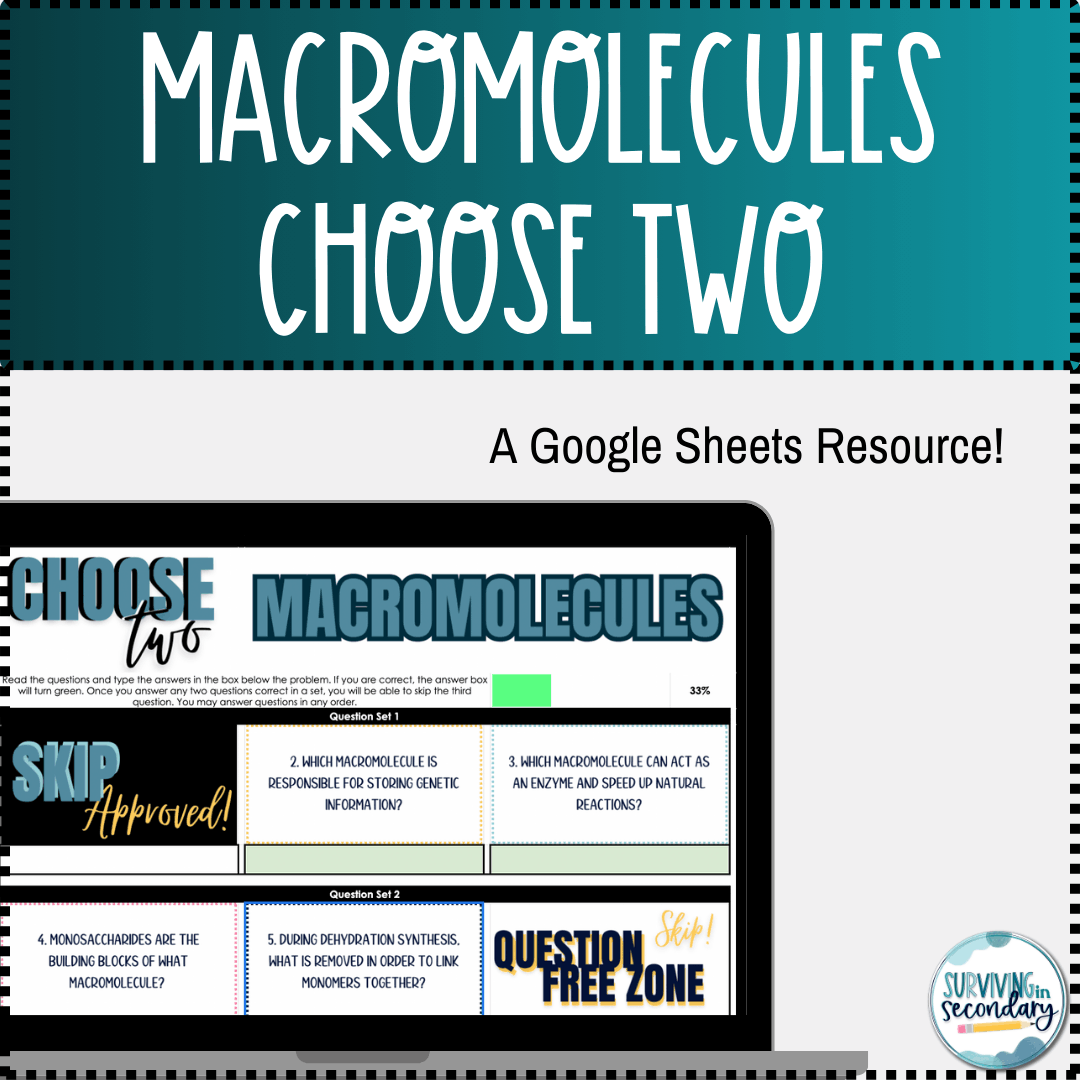
FREE Digital Lesson Plan
This Macromolecules Digital Activity from Kasi and Jess is designed to hand the reins back to your learners.
Student Choice: Using a "choose two" format, students select the paths they take to answer questions, increasing their buy-in and motivation.
Instant Feedback: The self-checking mechanism gives students immediate results. If they're on the right track, they move forward; if not, they know exactly where to pivot.
Zero Prep, High Impact: Whether you need a solid retrieval practice, a digital station, or a bulletproof sub plan, this resource is ready to roll.
Summary: Igniting Curiosity through Creative Teaching
It has been a privilege to share the insights of Kasi and Jess from Surviving In Secondary today. Their dedication to secondary science student engagement—especially for those students who feel like the traditional system isn't built for them—is truly inspiring. From courtroom dramas over the characteristics of life to high-tech ciphers on Google Sheets, they are proving that science can be accessible, fun, and deeply rigorous all at once.
I especially love their “stressfun” approach to self-checking activities. Thinking about your own classroom, which topic do you find the most “sabotaged” by student disengagement, and could a gamified “cipher” be the key to fixing it? I’d love to hear your experiences with getting reluctant learners to take the lead in their own science journey. Drop a comment below and share your favourite “secret weapon” for engagement!